The Reminiscence — A Story at Connecticut College
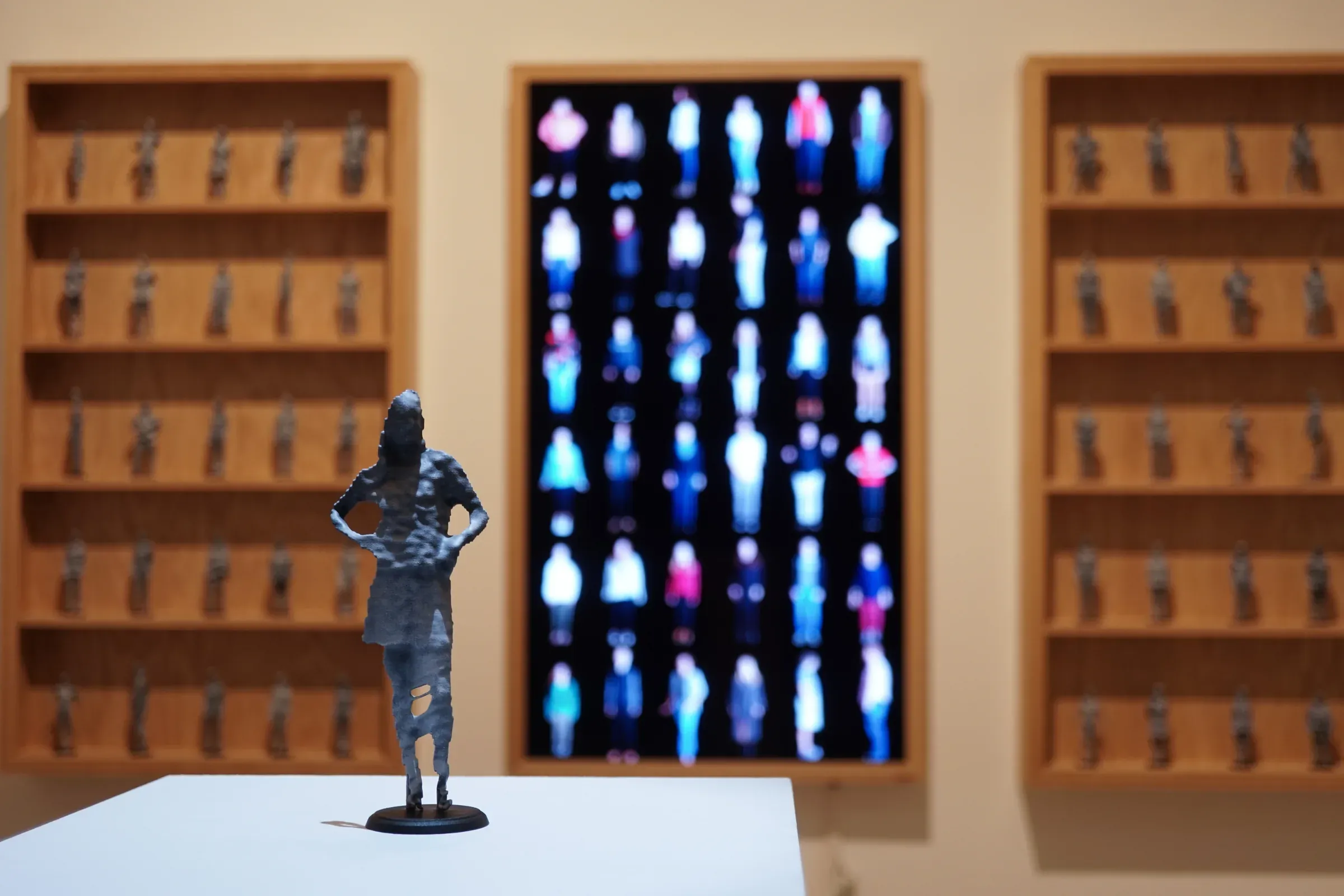
The first edition of The Reminiscence: a digital (re)creation of posture-portrait photography with today’s students, in which 3D-printed sculptures call up each participant’s experience.
§ 01
About this edition
Dates
February 2018
Venue
White Box Gallery and Gallery 66, Connecticut College, New London, CT
Related
Baldwin, Henderson, & Lee (2020), Body Studies Journal (opens in a new tab)
The Reminiscence — A Story at Connecticut College is our first interactive installation. It recreates the practice of posture-portrait photography digitally, with today’s students and today’s technology.
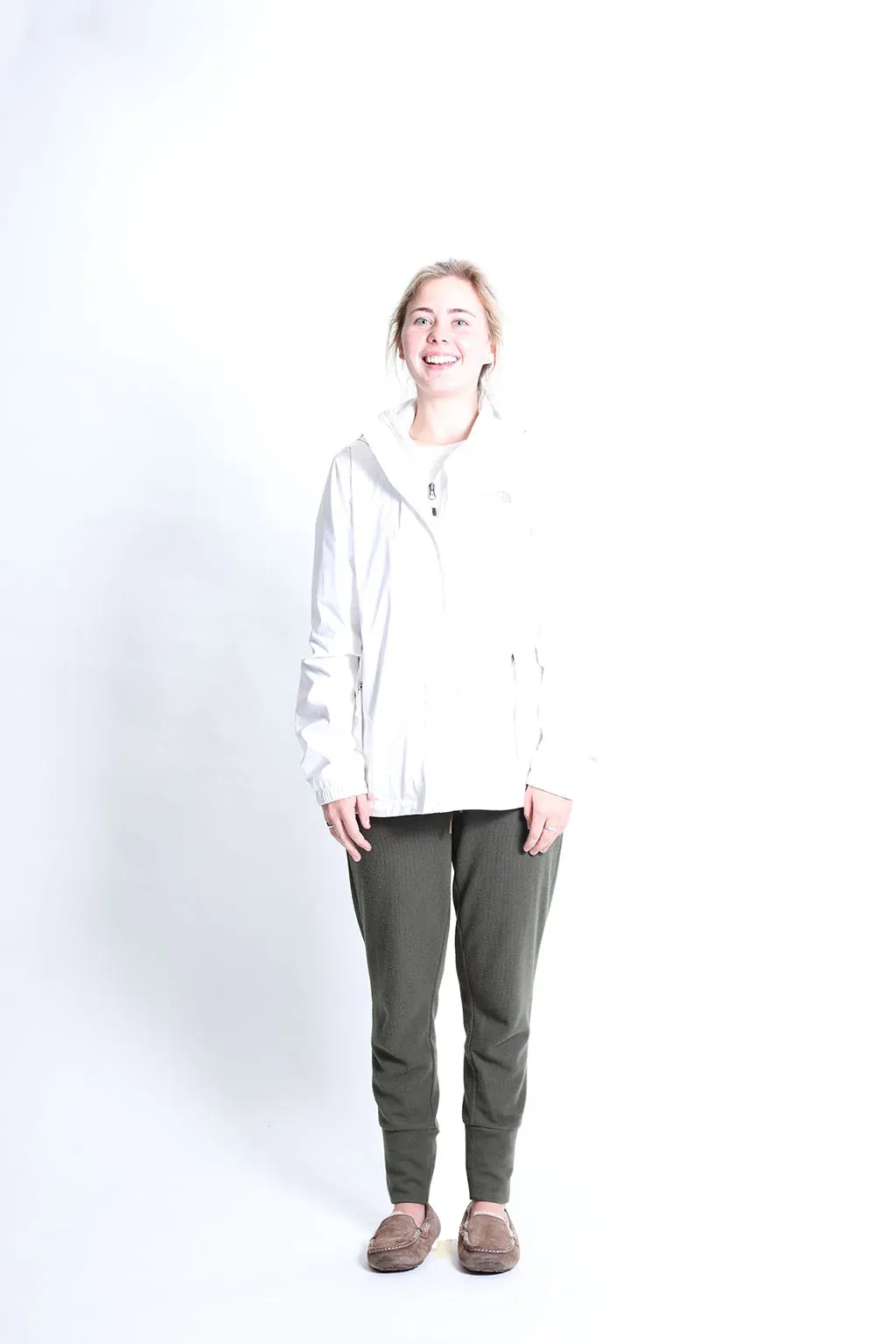
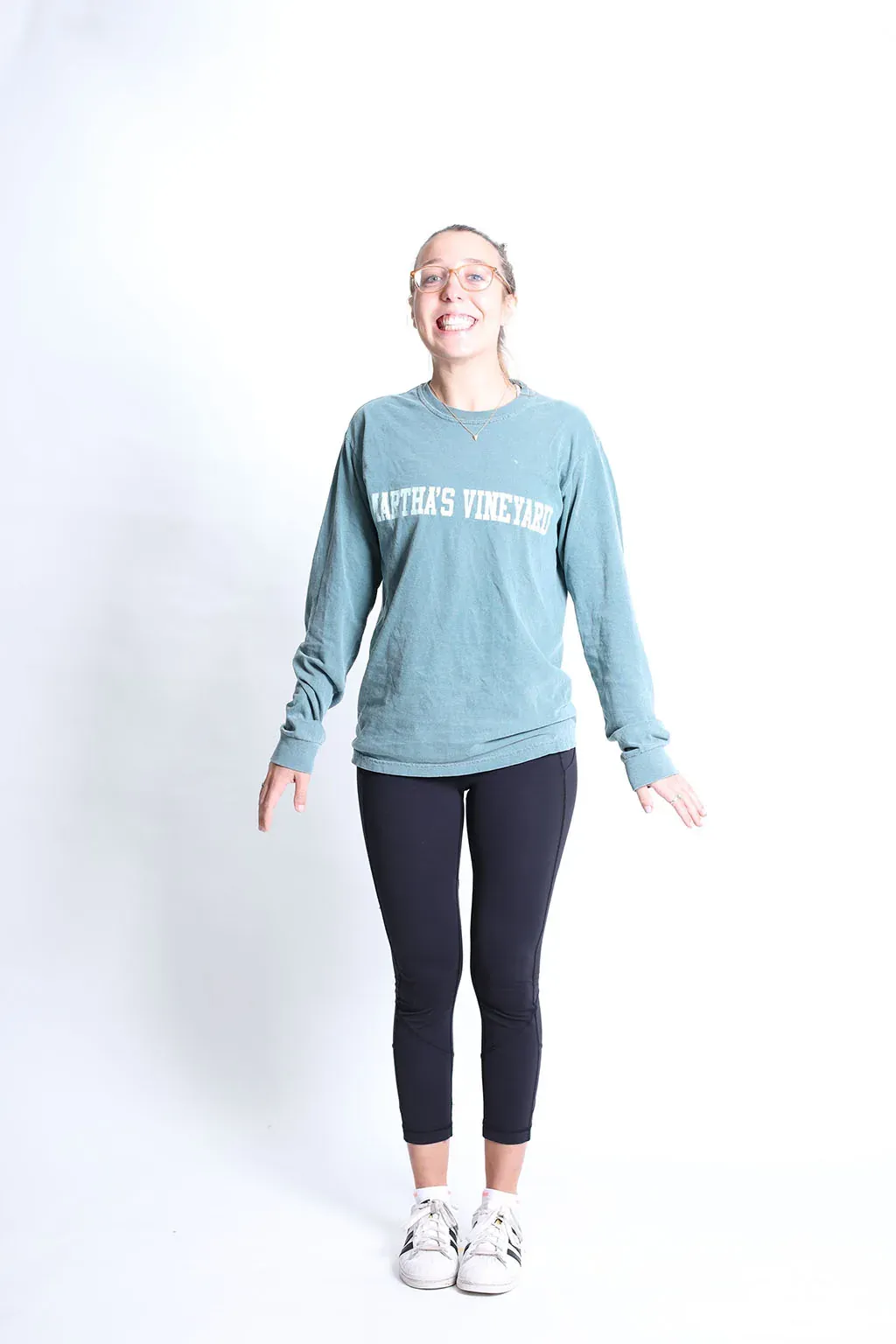
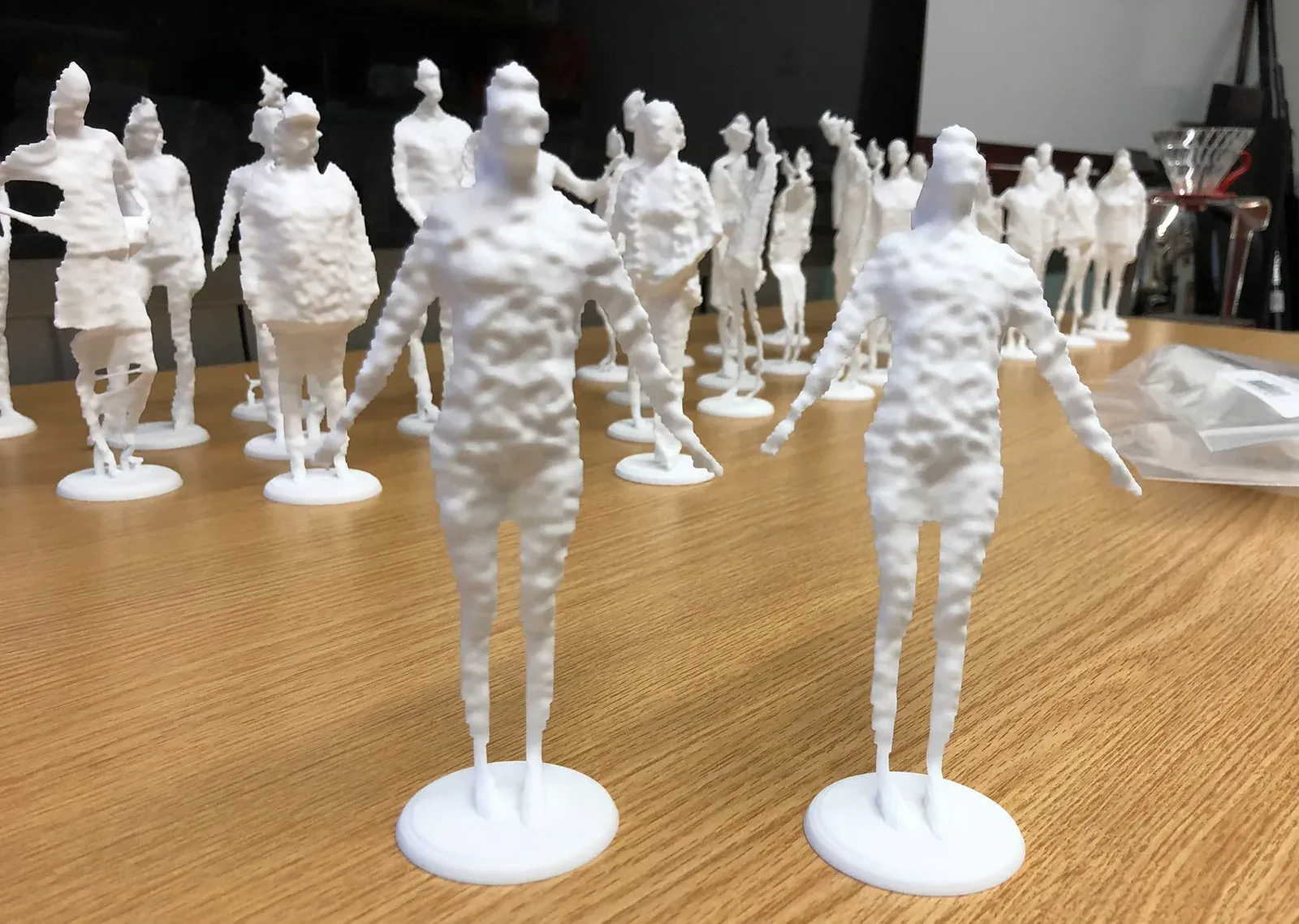
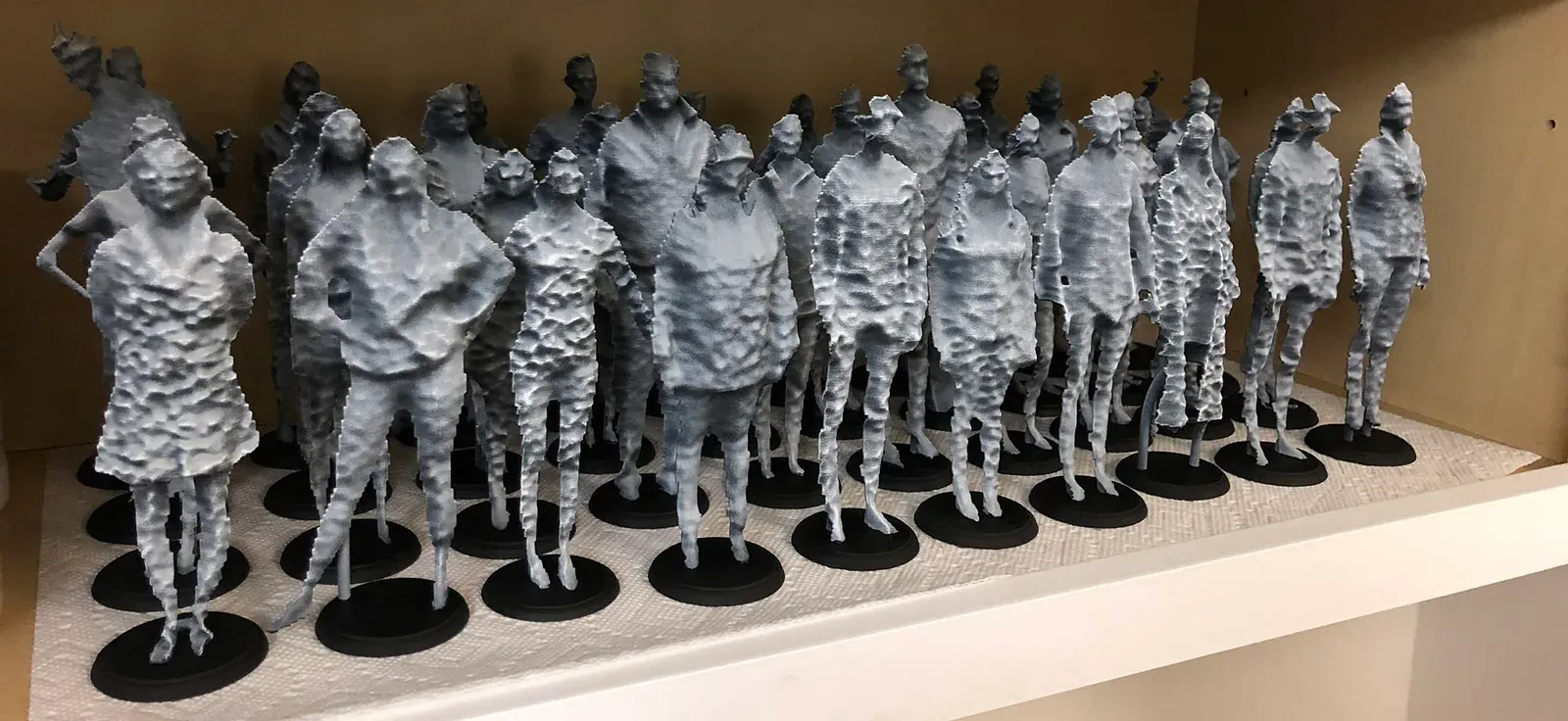
Most evidence of the original practice was destroyed. But memories of it stayed with the people who were students from the late 1920s to the 1960s. We invited the current college community to take part in (re)creating the posture portraits, to raise awareness of this history and to capture bodily reactions to it. We collected 2D images and 3D data and turned them into abstract visualizations of the photo-taking experience. Each participant also became a small 3D-printed sculpture. Placing a sculpture on the podium plays that participant’s visualization.
The installation was shown at the White Box Gallery and Gallery 66 during the 16th biennial symposium of the Ammerman Center for Arts and Technology. It is part of the (Re)creating the Posture Portraits research project.
Research
The research foundational to this edition involved a multi-methodological approach that linked archival research with personal narrative to investigate the historical practice of posture photography. In the summer of 2016, Andrea N. Baldwin, along with undergraduate researchers Laura Pratt (Auburn University ’17), Emily Green ’18, Rishma Mendhekar ’18, and Joseph Castro ’19, conducted extensive archival research at the Anthropological Archives of the Smithsonian Institution in Washington, DC, and the special collections at Connecticut College, Vassar, Barnard, Radcliffe, and Wellesley Colleges, uncovering institutional records of mandatory student examinations and the physical measurement of their bodies. To corroborate these archival findings, we recruited participants at a Connecticut College alumni reunion, ultimately conducting qualitative face-to-face and phone interviews in the fall of 2017 with five alumnae of Connecticut College and one from Wellesley and one from Vassar, aged 78 to 92. These women, who were photographed in various states of undress as incoming students between 1940 and 1956, provided vivid testimonies that transformed clinical archival data into deeply personal accounts of institutional surveillance and vulnerability under the male gaze. The majority disclosed a shift from obedience, which came with being a woman of that generation, to retroactively recognizing the practice as a horrifying violation of privacy.
§ 02
The installation
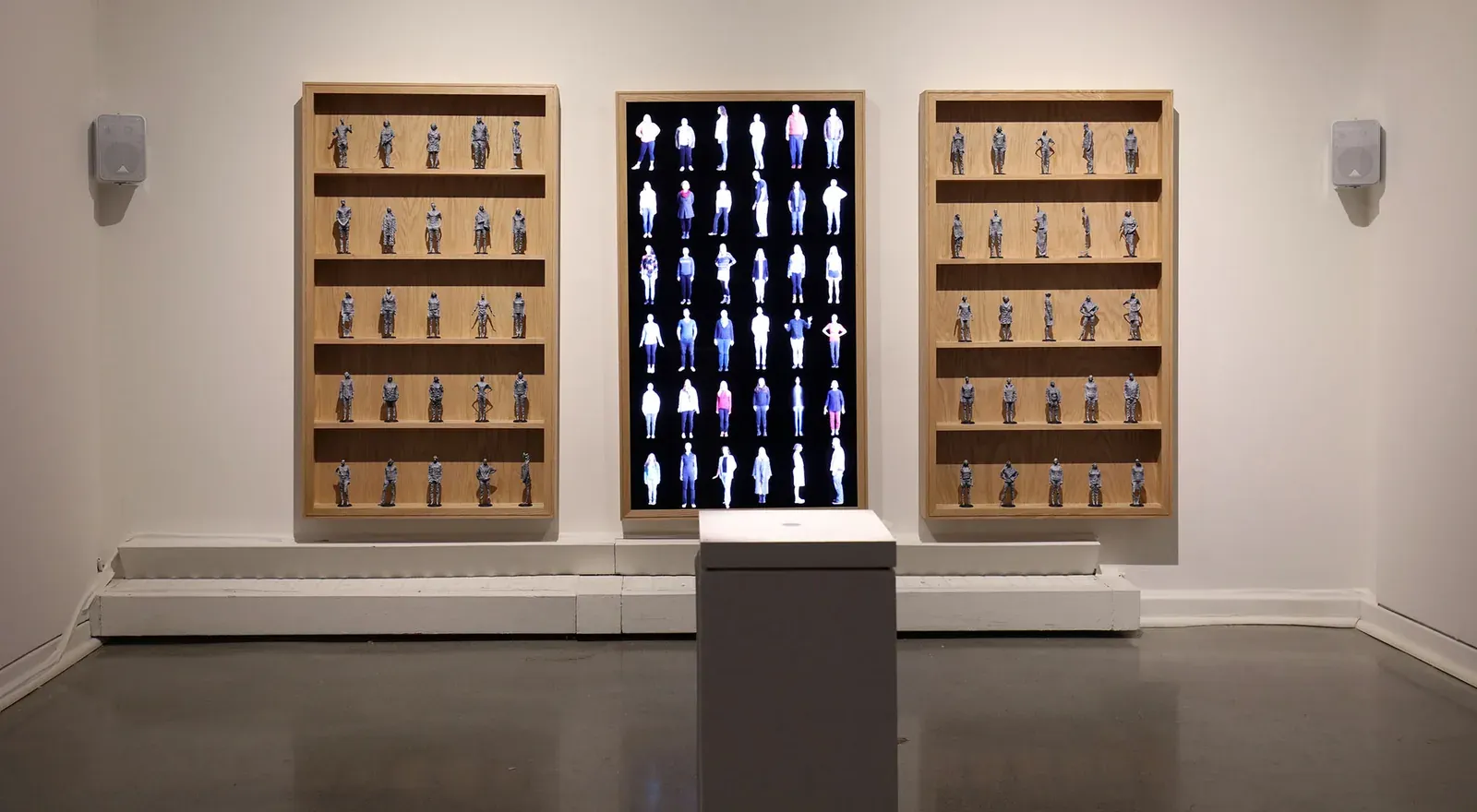
The work has three parts: a wall-mounted display, a collection of 3D-printed sculptures, and a platform that detects them.
At the White Box Gallery, the installation measured 13 feet wide by 16 feet long. A 65-inch OLED display sat at the center of the wall, with a custom shelving unit on each side holding 50 sculptures. A visitor chose a sculpture and placed it on the small podium in the middle of the room to see and hear that participant’s visualization.
§ 03
Performance
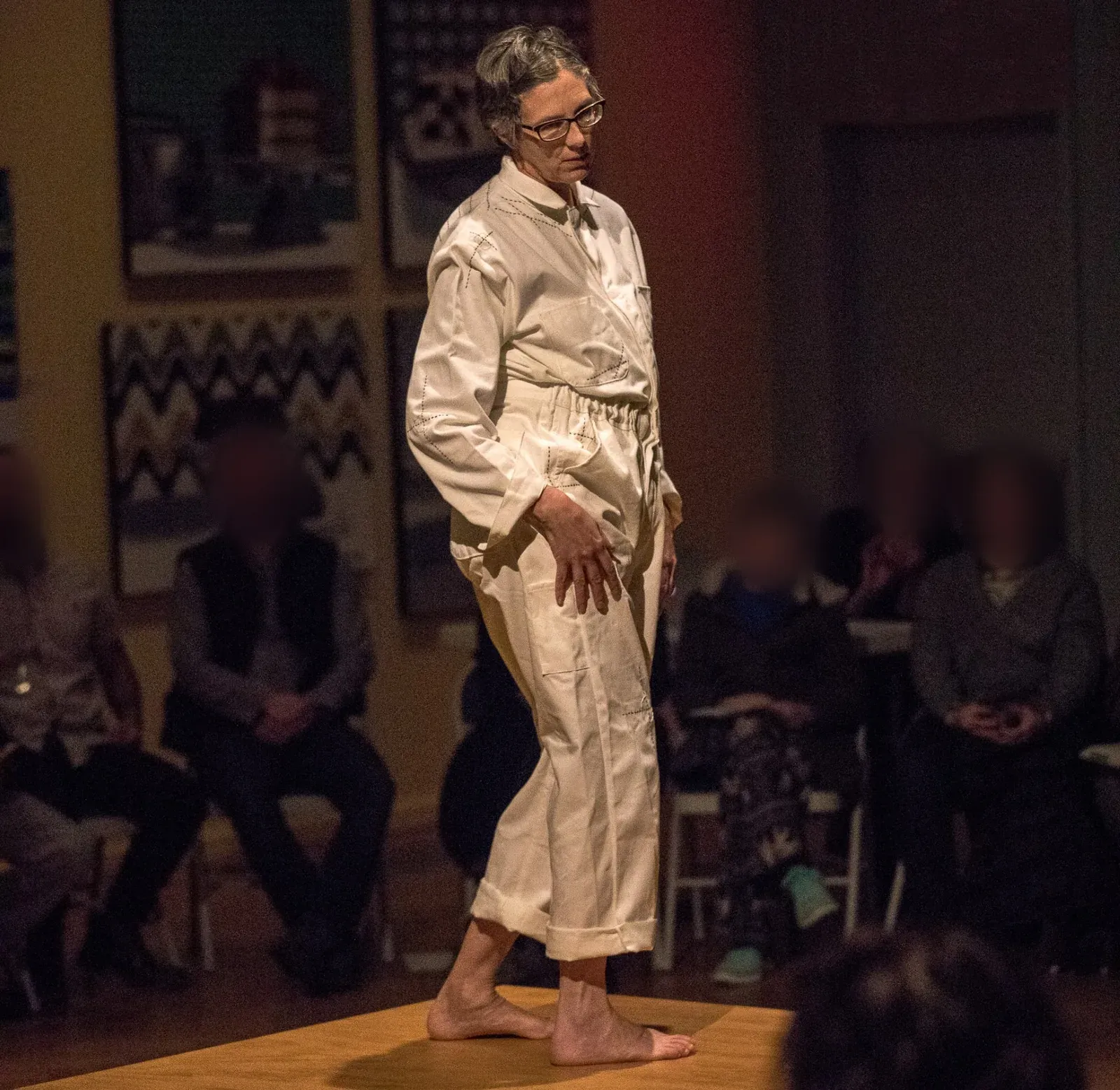
At the symposium’s opening reception, Heidi Henderson performed a solo inside the crowd rather than on a stage. She scanned the room for people whose spinal alignment caught her attention and took on their postures, one after another, with detailed precision: the tilt of a head, the curve of a spine, the narrowing of the shoulders. With each shift, she asked: How deep are the curves of the spine? Are the shoulders tipped? Were these shapes inherited, habitual, or the marks of an emotional history?
She wore a white jumpsuit embroidered with anatomical tracings that mapped where bones rise near the surface: spinous processes, collarbones, kneecaps. In a room of clinking glasses and small talk, the quiet, barefoot performer seemed uncanny. Some guests stepped back; others came closer, puzzled but engaged. Their glances, whispers, and self-conscious posture corrections became part of the work.
We think of this as kinesthetic empathy: close, physical attention to how another body holds its history (Lepecki, 2004). The performance ended when the reception did, without applause.
§ 04
How it works
The particle simulation
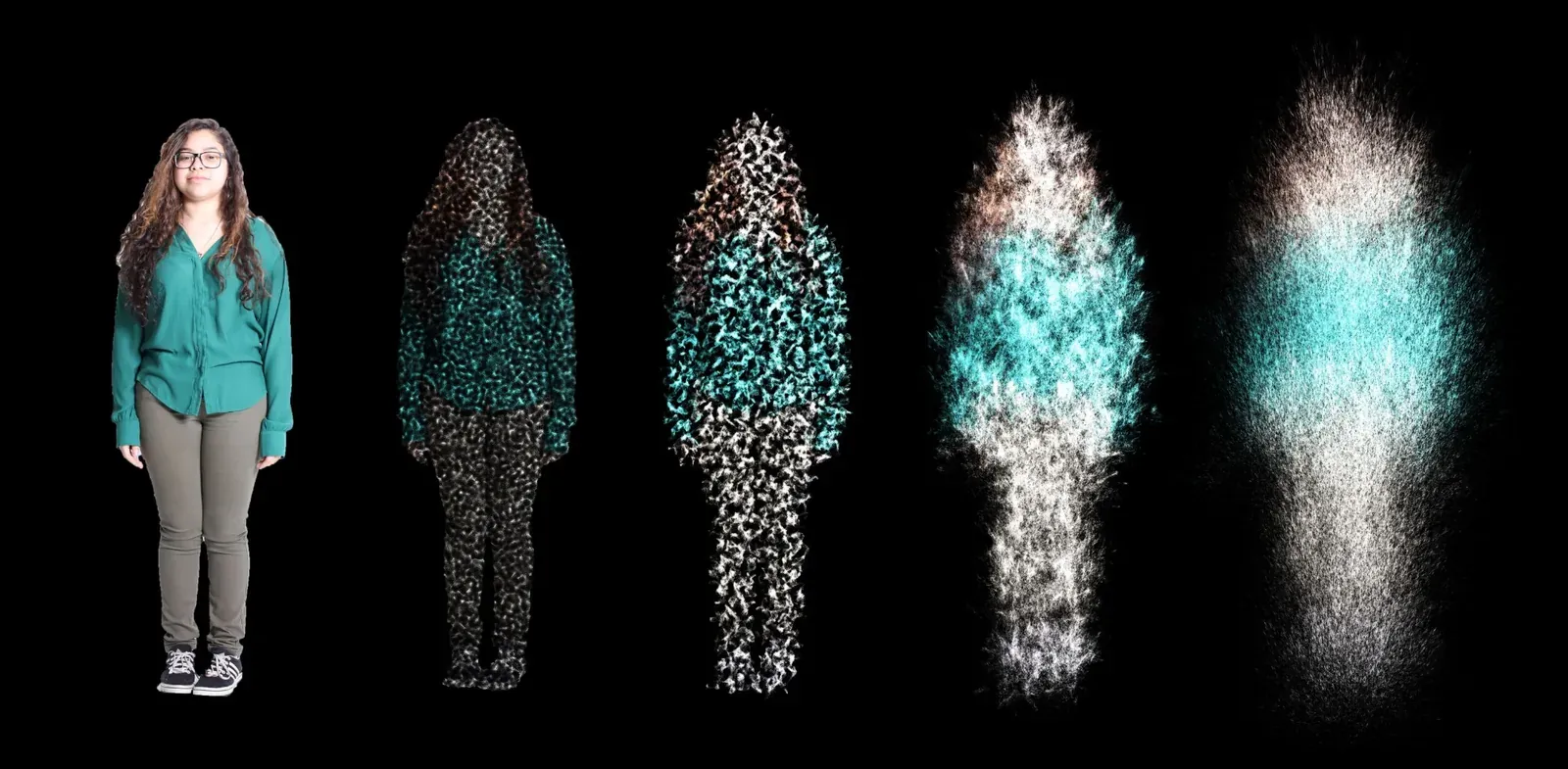
The particle simulation stands for the destruction of evidence. The original posture photographs were discarded without records, so we made an abstract visualization that dissolves each photograph pixel by pixel.
Each photo has about eight million pixels at 4K resolution, and every pixel becomes a particle. A turbulence simulation based on 3D Perlin noise moves the particles. Moving eight million particles in 3D in real time is too much for the CPU at interactive frame rates, so we moved the simulation to the GPU, which made it more than 100 times faster.
Bodily movement
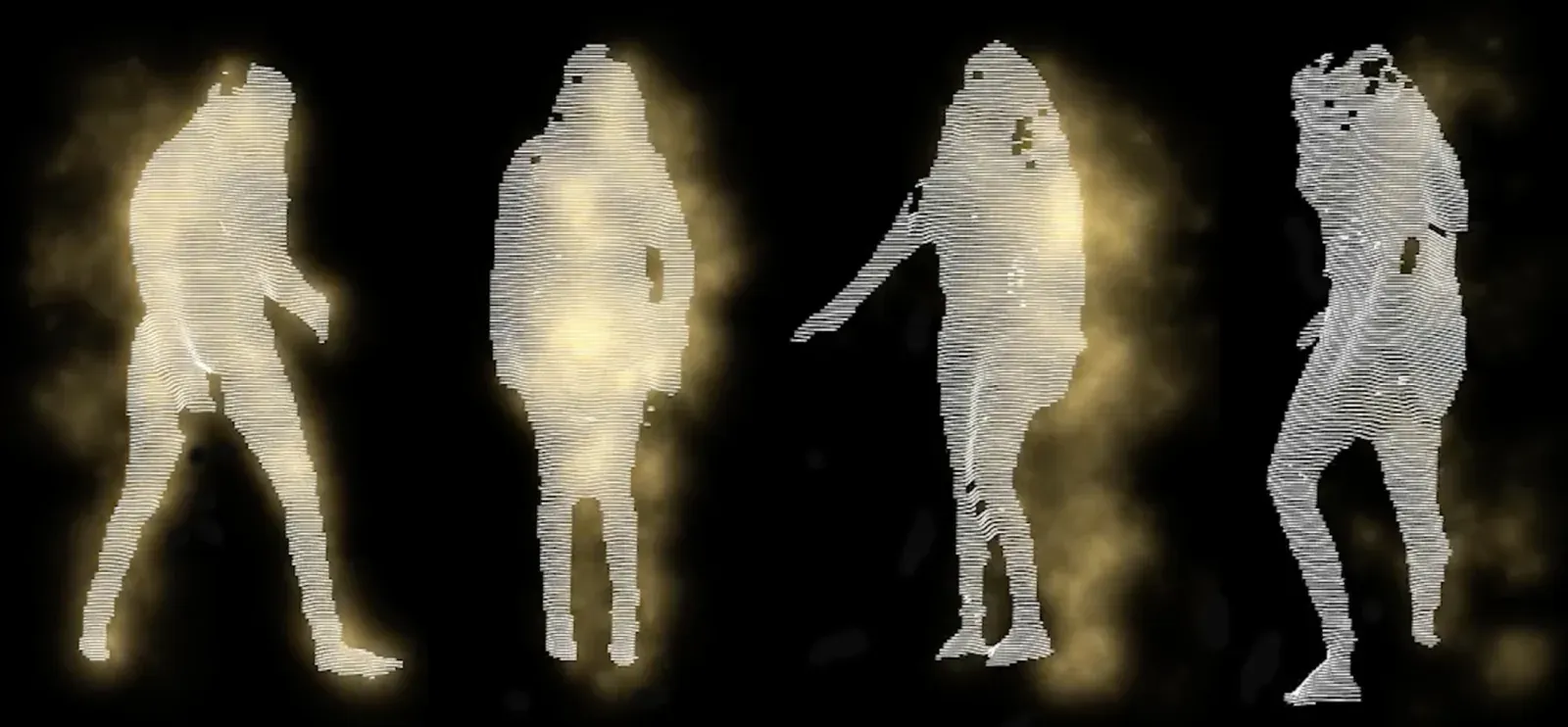
During the photo sessions, we also recorded each participant with a Microsoft Kinect, which captures 3D point clouds and video. When a visitor places a sculpture on the podium, the display shows that participant’s movement as a body traced by horizontal contour lines: how they approached the camera, paused for the photo, and left. Nervousness, confusion, excitement, and relief show in how people move. The sequence ends with the photo, its particle simulation, and the participant’s 3D model.
The sculptures
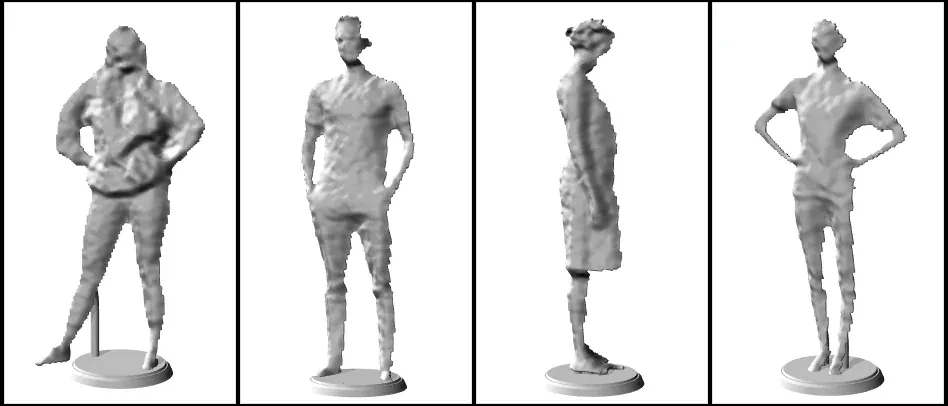
We reconstructed a 3D mesh model from each participant’s recorded point cloud, then extruded the polygonal surface into a thin 3D shape. Each model was printed at 1/10 scale with selective laser sintering (SLS). We then washed, primed, and painted the raw prints. Each sculpture has an RFID tag in its base, so the system can identify it and match it with that participant’s data set.
The installation system
The podium holds an RFID reader and a microcontroller, which detect the sculpture a visitor places on it. Four speakers, one in each corner, play 3D spatial sound. Three Philips Hue light bulbs add an interactive lighting effect.
§ 05
Videos
§ 06
Credits
- Collaborators
- Andrea N. Baldwin
- Heidi Henderson
- Sangyoon Lee
- Student researchers
- Laura Pratt (Auburn University ’17)
- Emily Green ’18
- Rishma Mendhekar ’18
- Isaiah Porter ’18
- Joseph Castro ’19
- Support
- Faculty Research Grant, Ammerman Center for Arts and Technology
- Jean C. Tempel ’65 Computer Science Assistant Professorship
- Summer Science Research Institute
- Research Matters grant, Office of the Dean of Faculty, Connecticut College
- Thanks
- The participants who volunteered for the “Re-Production” of the posture photo event, where we collected photographs and 3D data
- Connecticut College alumni who shared their experience of being photographed
- Shawn Hove and Grzegorz Surman, who helped us design and build the framing and shelving
- Andrea Wollensak and Libby Friedman, for their continued support of our work
- The Ammerman Center for Arts and Technology, for its generous support
- Photography and video
- Sangyoon Lee
- Heidi Henderson
§ 07
References
- Lepecki, A. (Ed.). (2004). Of the presence of the body: Essays on dance and performance theory. Wesleyan University Press.