The Reminiscence — participatory performance and installation
The second edition of The Reminiscence: a live performance in the Cube, where the audience was photographed on arrival and became part of the show.
§ 01
About this edition
In 2021, in the Cube at Virginia Tech’s Moss Arts Center, The Reminiscence became a live performance. The 2018 installation used portraits we had collected and processed months in advance. Here, audience members were photographed on arrival, and their portraits joined the performers’ stories the same evening. The change put the project’s central question, what it means to be seen, at the center of a shared event (Berlant, 2011; Browne, 2015).
Research
Each performance was anchored by one question: “When was the first time you felt seen?” The question grew out of our archival research into posture photography and eugenic visual regimes in elite U.S. colleges (Vertinsky, 2007; Lowe, 2005). It opened onto recognition, vulnerability, the ambivalence of visibility, and the racialized and gendered legacies of institutional surveillance (Browne, 2015). Where the historical posture portrait imposed a rigid, objectifying gaze, the installation let participants choose how they were represented.
The performance turned the coercive legacy of posture photography into a collaborative, co-authored event. The history of the posture exam, originally a disciplinary technology of racialized and gendered surveillance (Young, 1990; Vertinsky, 2002), was turned on its head to become the impetus for a powerful counter-narrative. By subverting this clinical legacy, we spoke back to institutional control through a creative process of collective self-narration and witnessing. The 2021 edition was also our most technically complex, combining real-time data processing, procedural graphics, live performance, and spatial audio.
§ 02
The installation
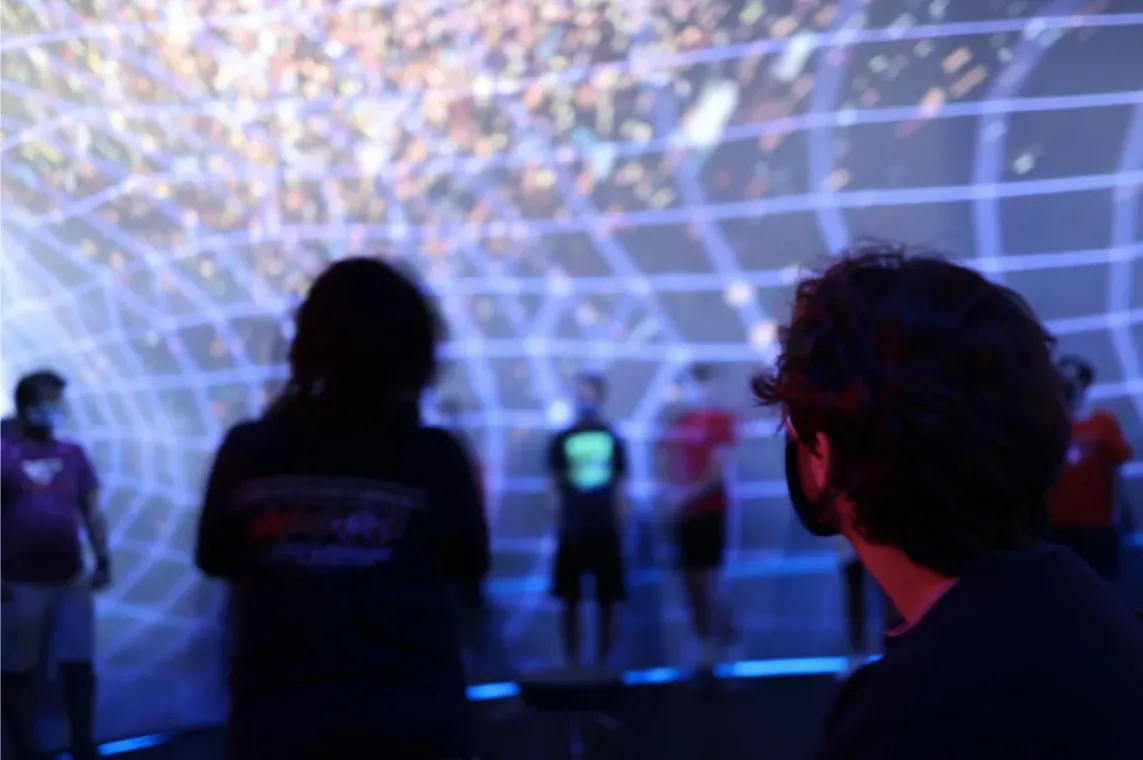
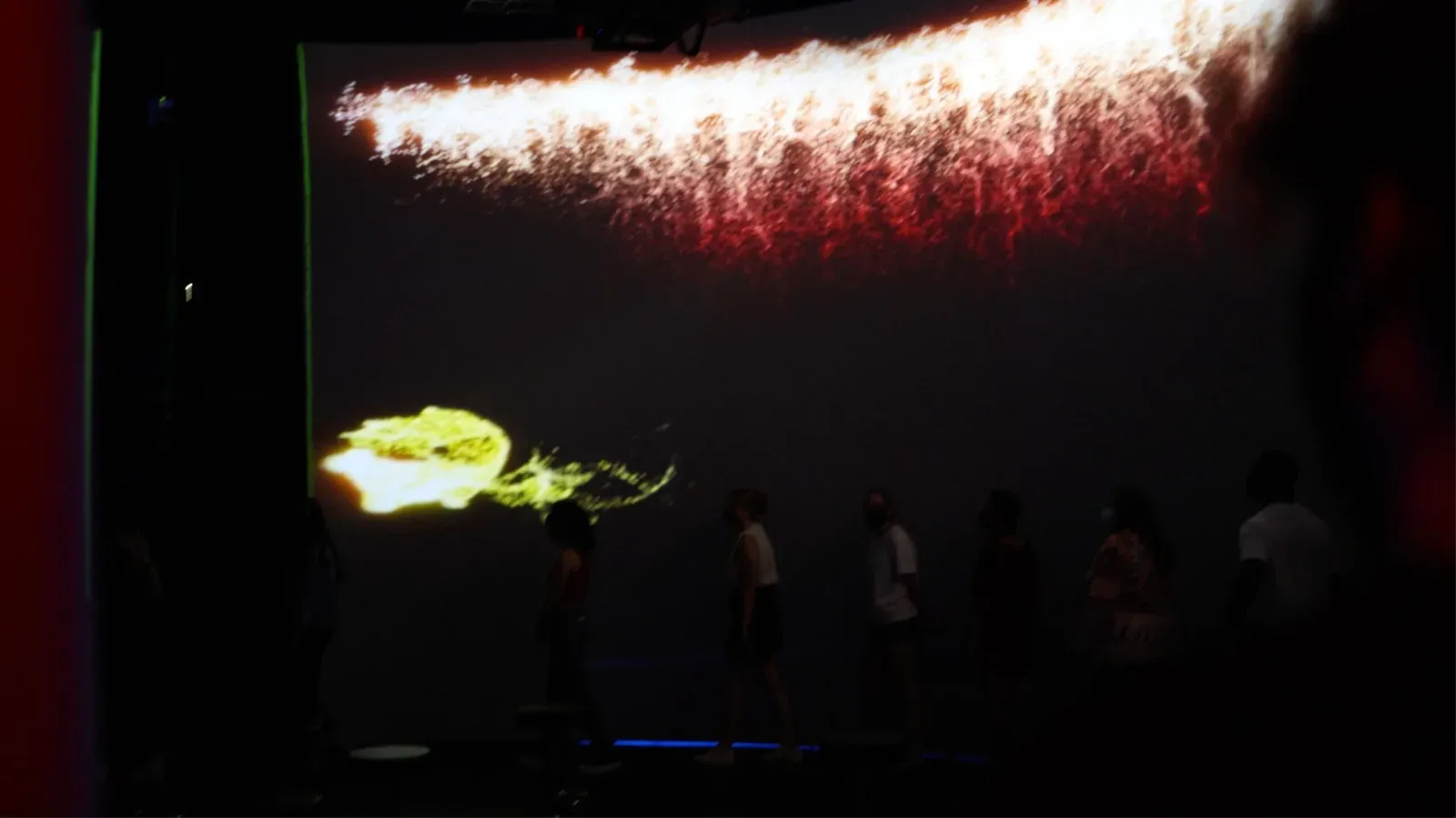
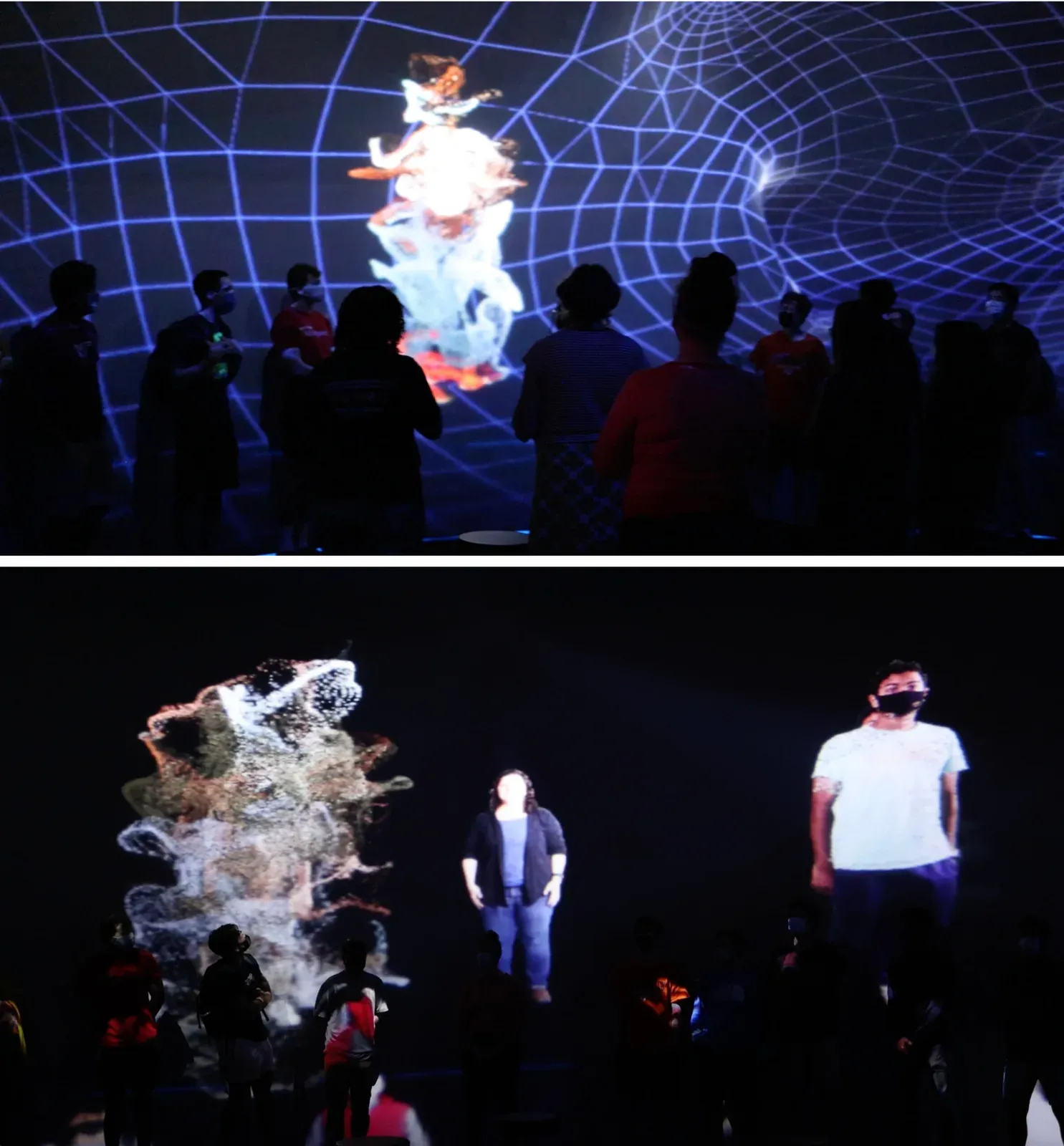
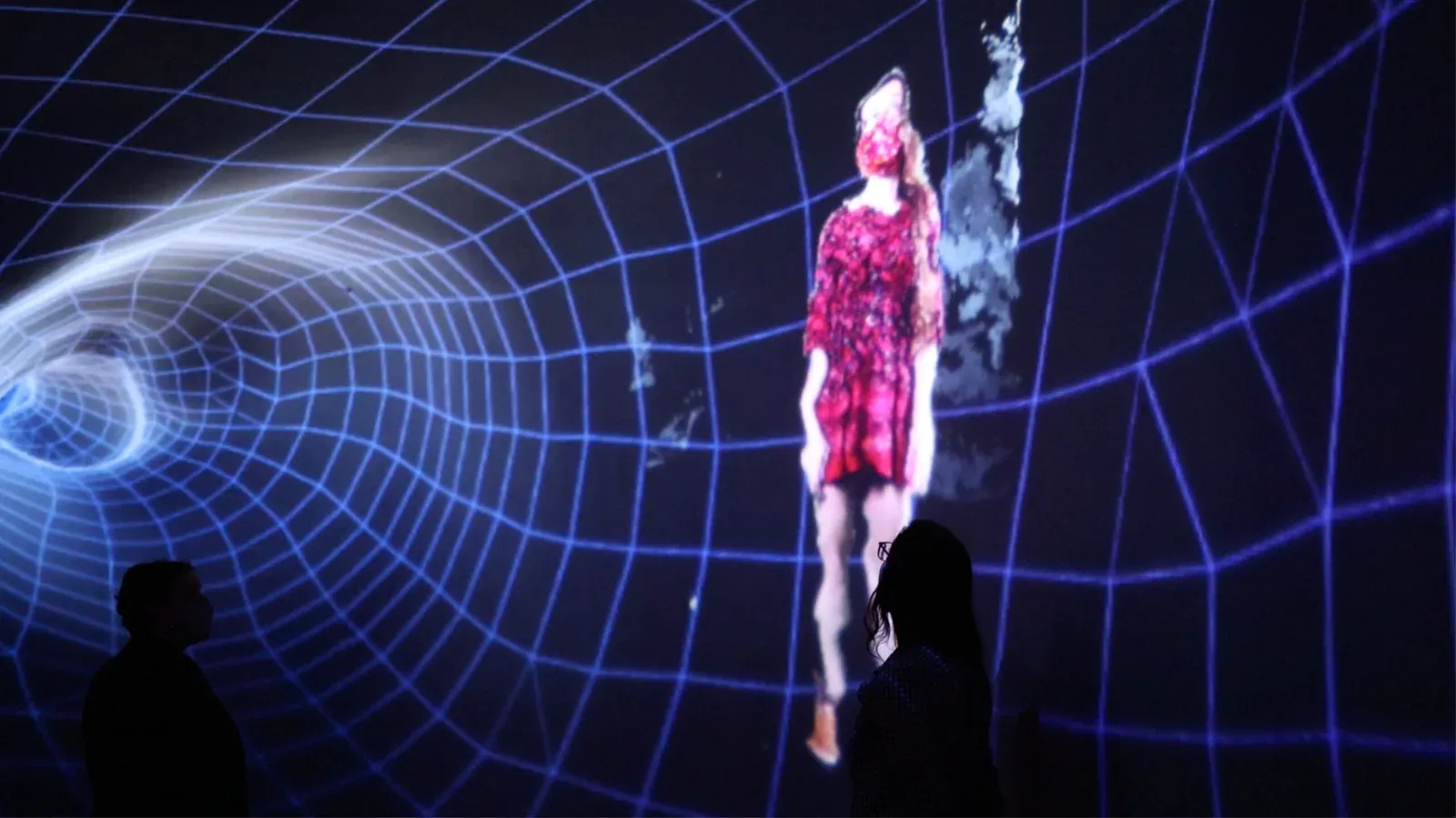
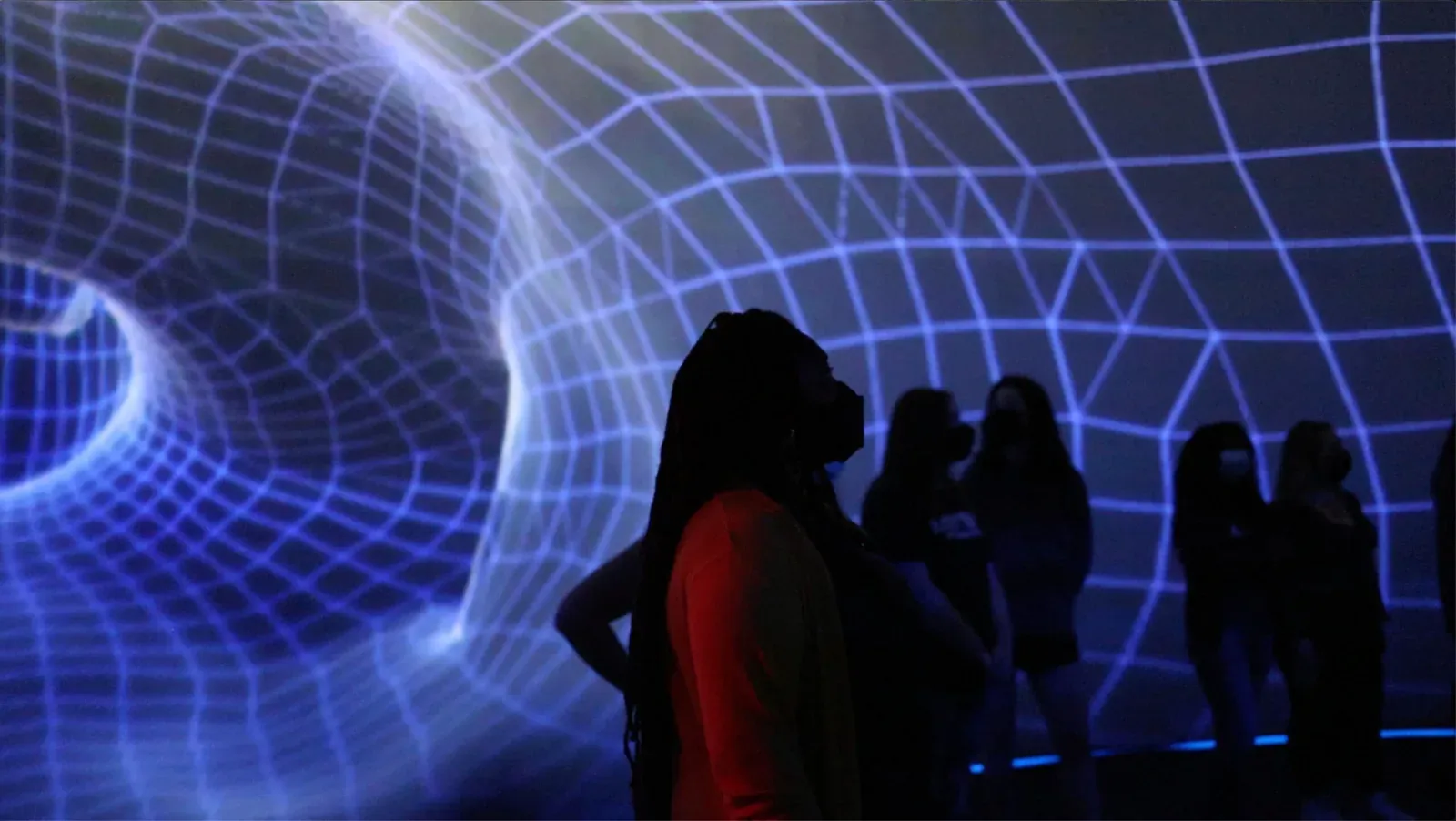
The performance moved through three parts, projected on the Cube’s cyclorama:
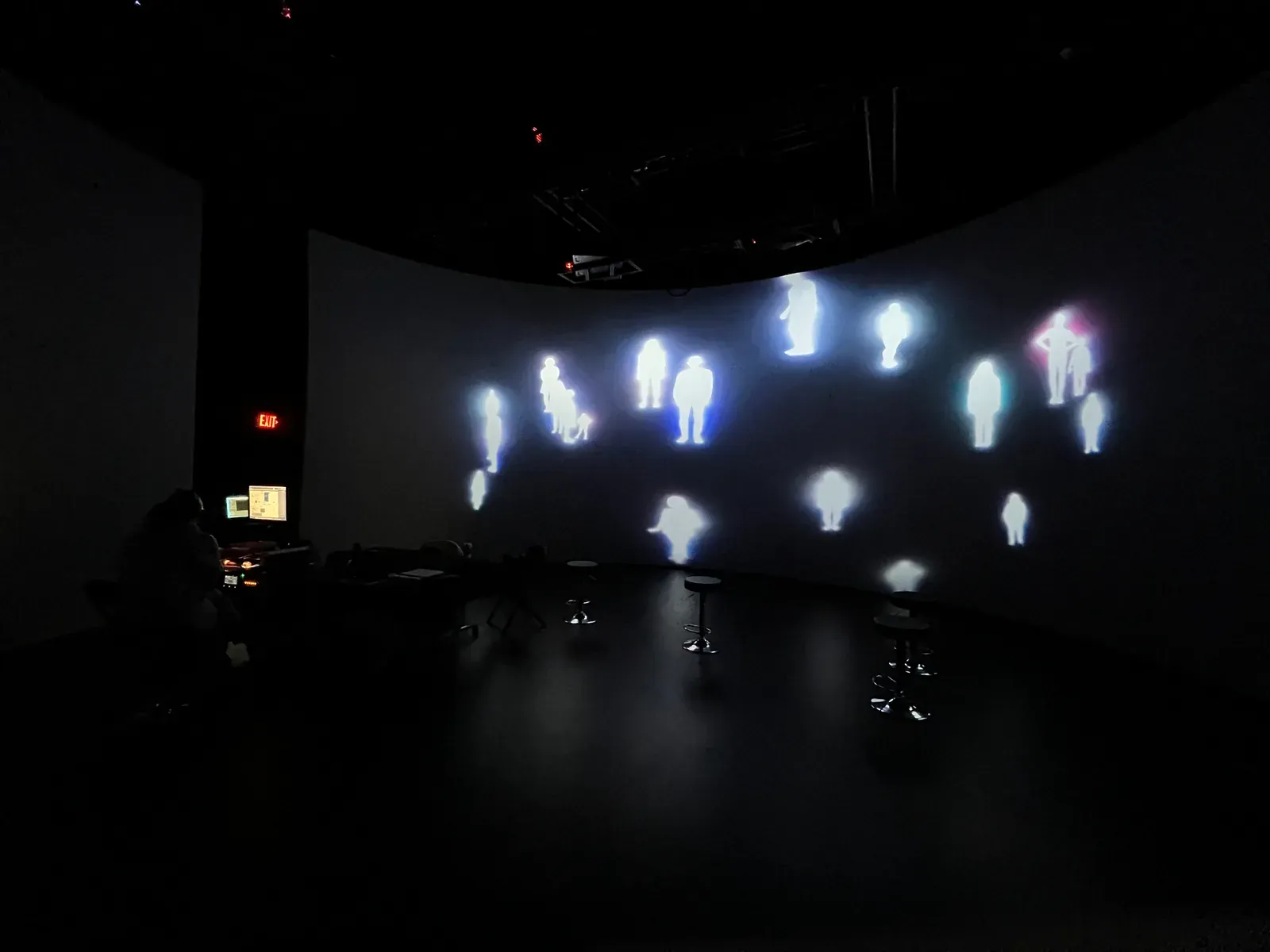
- Threshold. A dim corridor of spectral, blurred figures, recalling the “shadow portraits” of historical posture photography.
- Embodied monologues. A slow view from inside a wireframe human body, paired with the performers’ stories.
- Collective reflection. The audience’s own portraits emerged, dissolved, and re-formed.
§ 03
Performance
Heidi Henderson proposed building the performance from original stories. Andrea N. Baldwin issued an open call to the Virginia Tech community with the prompt “When was the first time you felt seen?” Eight students responded. Each wrote a personal monologue, which Andrea edited to under two minutes and returned for their approval. The students recorded their monologues at the Athenaeum at Virginia Tech with audio engineer Joe Forte, along with the phrases “Do you see me?” and “Look at me!” in many tones and cadences. The form drew on Ntozake Shange’s choreopoem for colored girls who have considered suicide / when the rainbow is enuf: fragmented, interconnected monologues that together form one testimony.
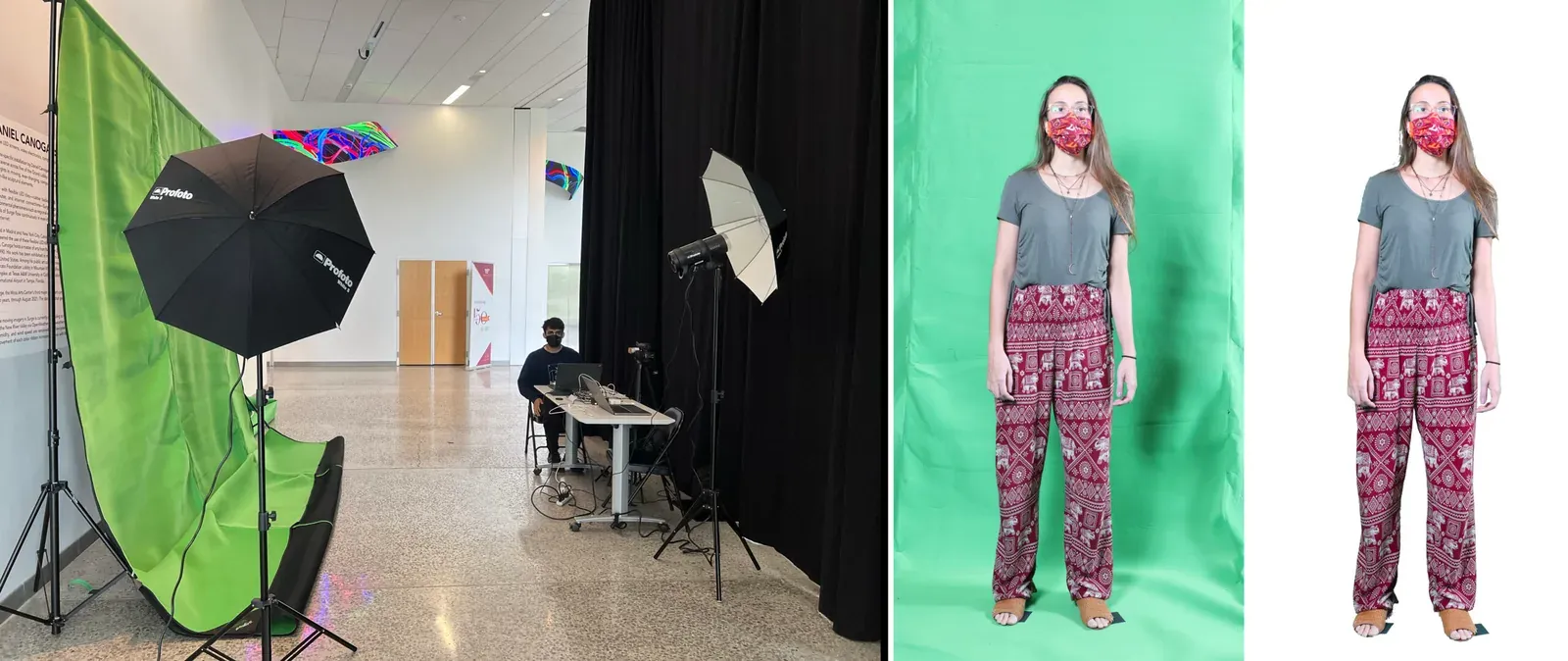
On arrival, audience members went through a short data-capture process: a consent form, a posture photograph taken by our student assistant Clara Rose Banks, and an introductory video she produced on the history of posture photography. We processed the photographs in near real time and built them into the performance. The first edition had needed months of data preparation.
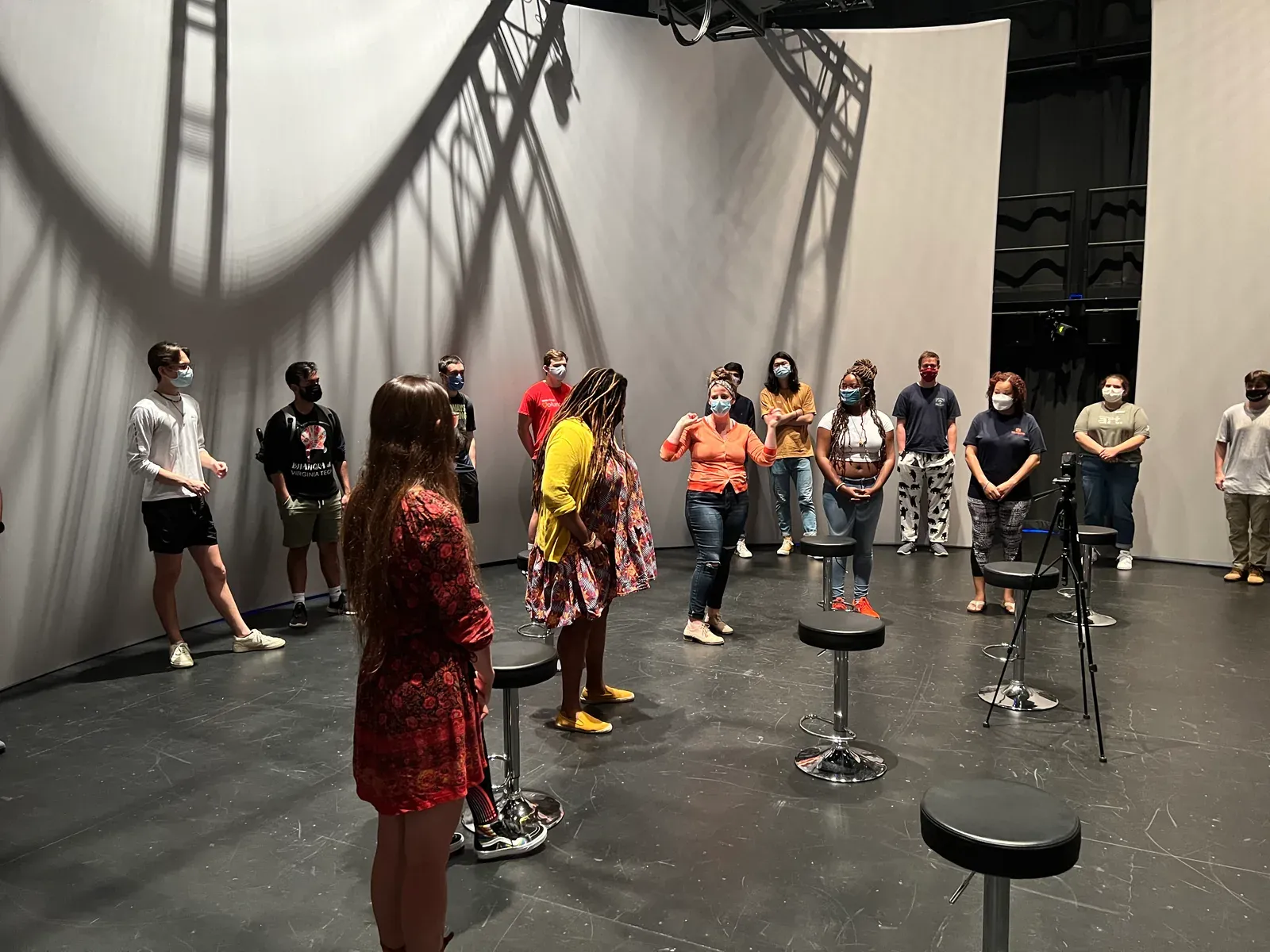
The audience then walked along the curved outside of the Cube, past ghostly white figures animated from the 2018 portraits, while recorded voices asked “Do you see me?” Inside, a glowing line of particles led the lead performer, and everyone following, into the space. Each show had three to seven performers, Heidi Henderson and the student performers, who at first could not be told apart from the audience. As each “Monologue of Being Seen” played, the performer’s projected portrait dissolved into particles and then returned whole. At the end, the refrain changed to “Look at me!” and the audience’s own portraits appeared alongside the performers’. Afterward, the audience stayed in the circle to talk, and written surveys gathered their responses.
With performers standing among the audience, it was often unclear who was watching whom. The wireframe body that surrounded everyone invited “body empathy”: recognizing a shared bodily vulnerability beneath socially constructed difference (Wynter, 2003).
§ 04
How it works
The Cube is a black-box theater with 134.6-channel 3D spatial audio and a panoramic cyclorama. Our computer rendered the visuals in real time and sent them to the Cube’s main workstation, which drove four projectors. For sound, it sent Open Sound Control (OSC) messages to the Cube’s audio system. Each monologue was split into short fragments, some only a word or two, and played from random positions around the room.
§ 05
Gallery
§ 06
Credits
- Collaborators
- Andrea N. Baldwin
- Heidi Henderson
- Sangyoon Lee
- Performers
- Heidi Henderson
- Jariah Strozier
- Leslie Ann Robertson Foncette
- Yezi Yang
- Jenaya Amore
- Sophia Barthlow
- Leah Ramnath
- Aline De Souza
- Suzie Young
- Student researchers
- Tyler Silbey ’22
- Muhammad Bazeed Shahzad ’24
- Support
- Research Matters grant, Office of the Dean of Faculty, Connecticut College
- Thanks
- The Institute for Creativity, Arts, and Technology (ICAT) at Virginia Tech, our partner for this edition
- Ami Trowell, who helped with the performance choreography and script
- Clara Rose Banks, student assistant, who photographed the audience and produced the introductory video
- Joe Forte, audio engineer, who recorded the monologues at the Athenaeum
- Photography
- Sangyoon Lee
§ 07
References
- Berlant, L. (2011). Cruel optimism. Duke University Press.
- Browne, S. (2015). Dark matters: On the surveillance of Blackness. Duke University Press.
- Lowe, M. A. (2005). Looking good: College women and body image, 1875–1930. Johns Hopkins University Press.
- Vertinsky, P. (2002). Exercise, physical culture, and the emergence of the modern body. In J. A. Mangan & P. McIntosh (Eds.), Sport in history: The making of modern sporting history. Routledge.
- Vertinsky, P. (2007). Seeing and believing: Sheldon’s somatotypes and the visual construction of the “ideal” body. Canadian Bulletin of Medical History, 24(2).
- Wynter, S. (2003). Unsettling the coloniality of being/power/truth/freedom. CR: The New Centennial Review, 3(3), 257–337.
- Young, I. M. (1990). Throwing like a girl and other essays in feminist philosophy and social theory. Indiana University Press.