The Reminiscence — The Monologues of Being Seen
The third edition of The Reminiscence: a standalone exhibition that brings together the earlier work and new participants’ reflections and monologues of being seen.
§ 01
About this edition
Dates
November 10 – December 10, 2022
Venue
White Box Gallery, Connecticut College, New London, CT
Related
Baldwin, Henderson, & Lee (2020), Body Studies Journal (opens in a new tab)
Baldwin, Lee, & Henderson (2026), Visual Regimes of Discipline in U.S. Higher Education (opens in a new tab)
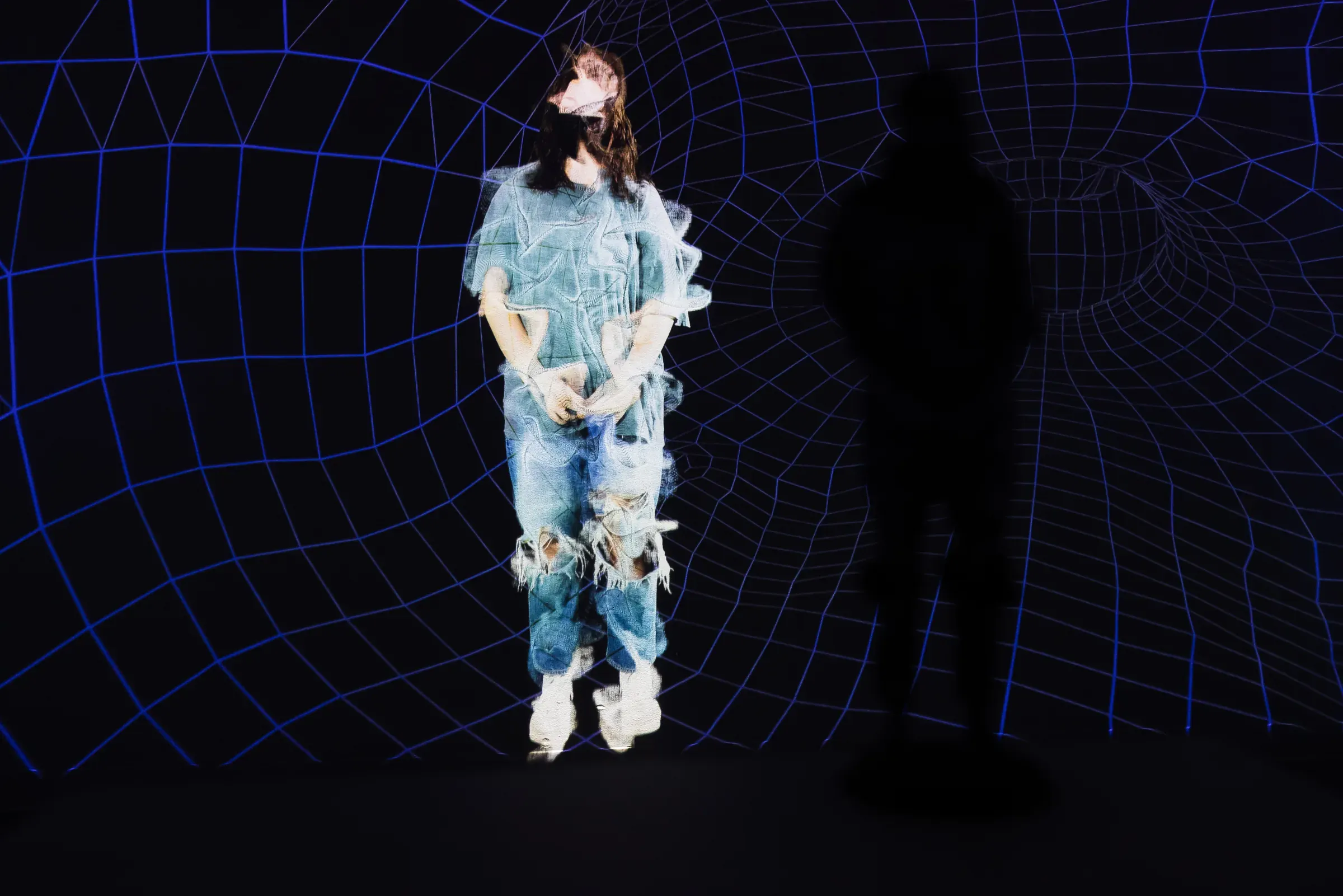
The Reminiscence — The Monologues of Being Seen is the third edition of our interactive installation and performance. We designed it as a standalone exhibition. It presents the earlier work as a whole, together with new participants’ reflections and monologues of being seen.
The first edition, The Reminiscence — A Story at Connecticut College (2018), invited current students to hear the story of the posture portraits and to try the practice in their own way. We captured their photographs and 3D data and built our first interactive installation. The second edition (2021) was an immersive, participatory performance. Dancers on site shared their own experiences of being seen. At each performance, we also collected data from participants.
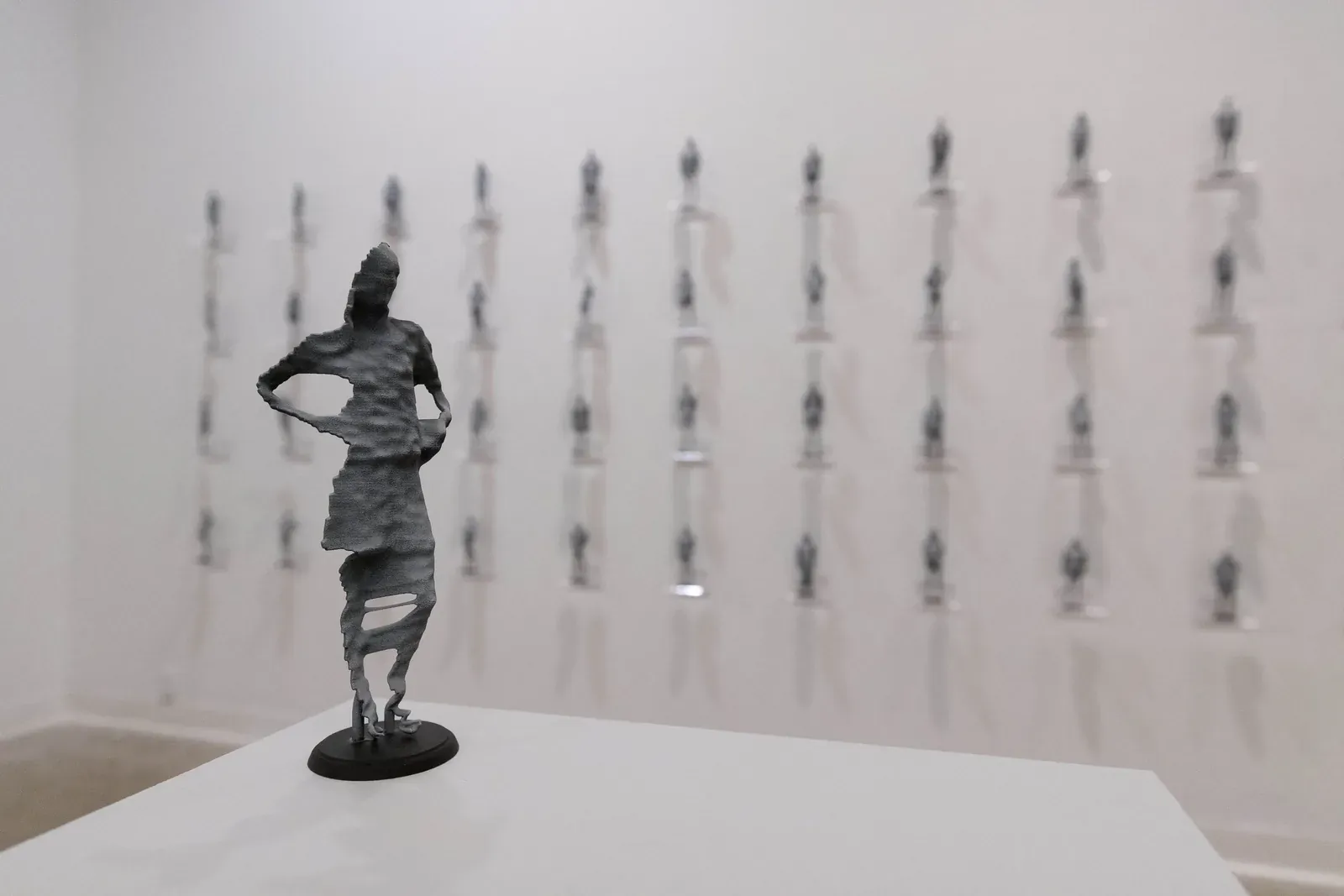
Over these editions, hundreds of participants have shared their data with us. This exhibition includes about 100 of their data sets and sculptures.
Research
The Posture Portraits Project is interdisciplinary. It examines how bodies have been made through scientific intervention and surveillance, and it engages with the inclusion of all bodies, including those traditionally seen as “Other.”
The project traces healthism in the modern American university: norms that cast the “healthy” as moral and pure and the “unhealthy” as foreign and polluted. These norms date back to the early 17th century and connect to the U.S. eugenics movement of the late 19th and 20th centuries. We examine how these ideas produced technologies of discipline and surveillance in higher education, among them the posture portraits. Colleges and universities across the country took these photographs from the 1920s to the 1960s. They used them to measure ability and good posture, which was then linked to intelligence, beauty, and what it meant to be “normal.”
We draw on case studies of colleges that took posture photographs, and on archival records and interviews with women who were photographed between 1940 and 1956. We ask how the practice was carried out and how people responded to it. We also ask how technology and the arts can critique this and other discriminatory practices, trace their links to the present, and work toward a more just society.
§ 02
The installation
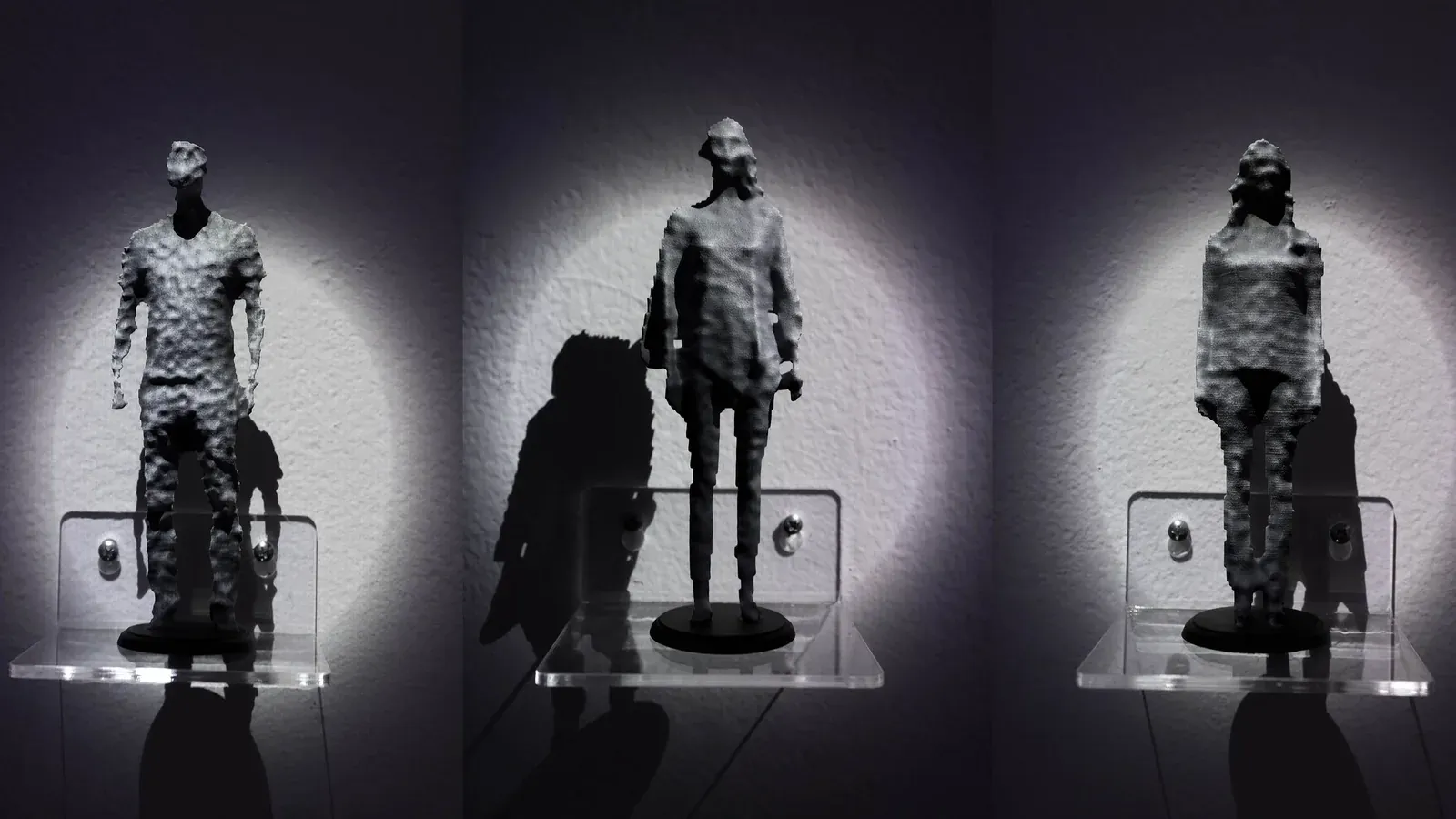
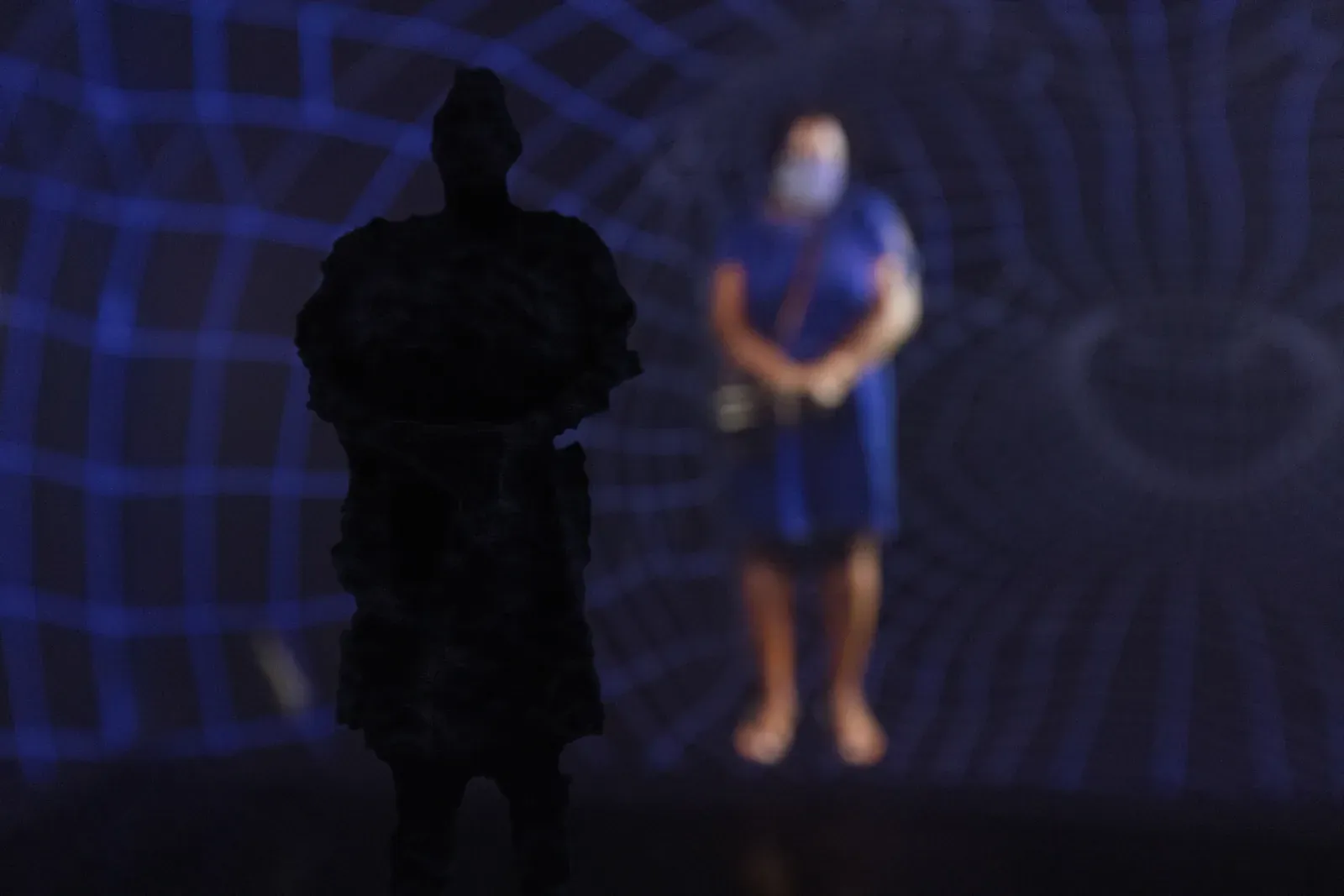
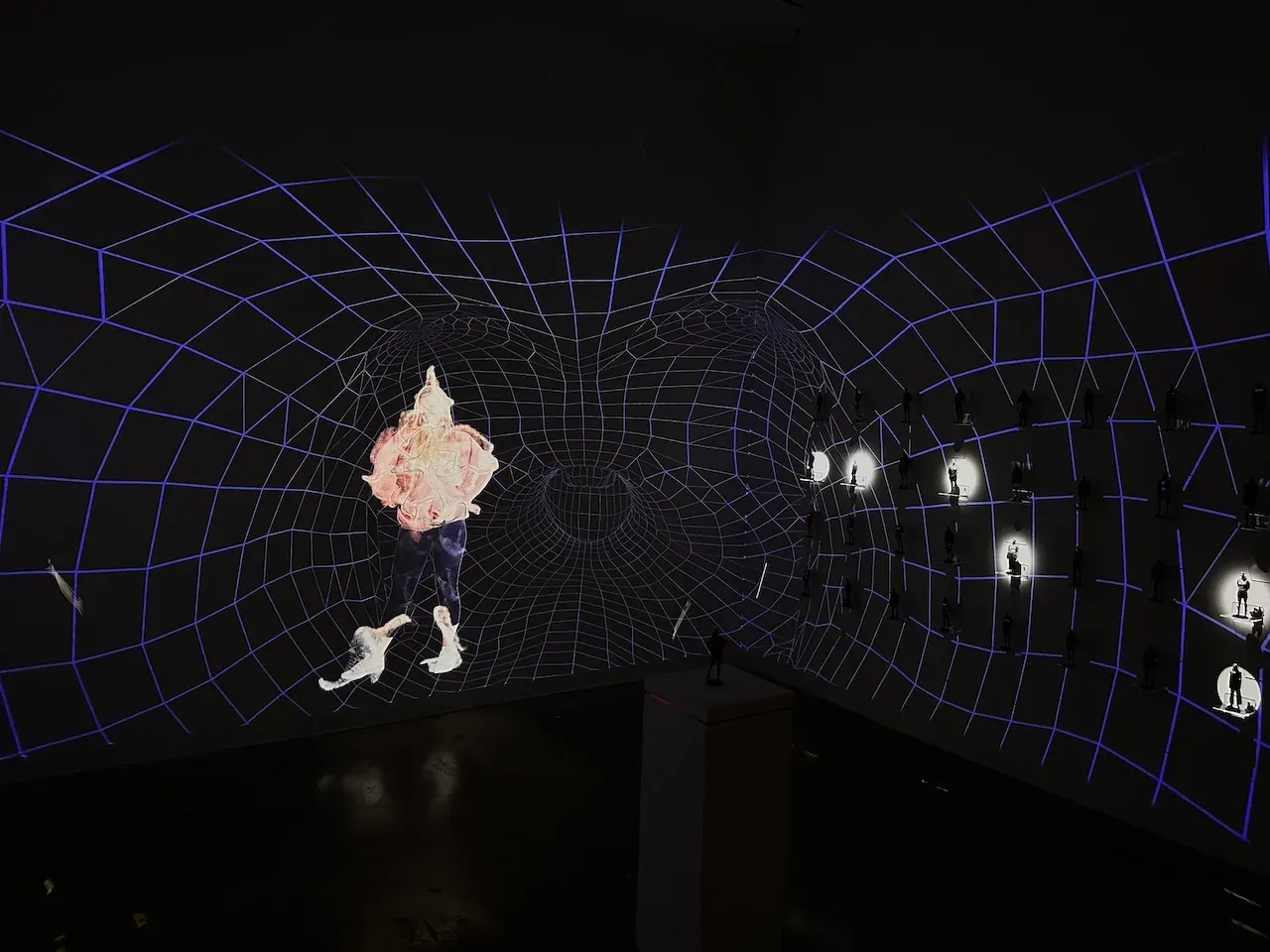
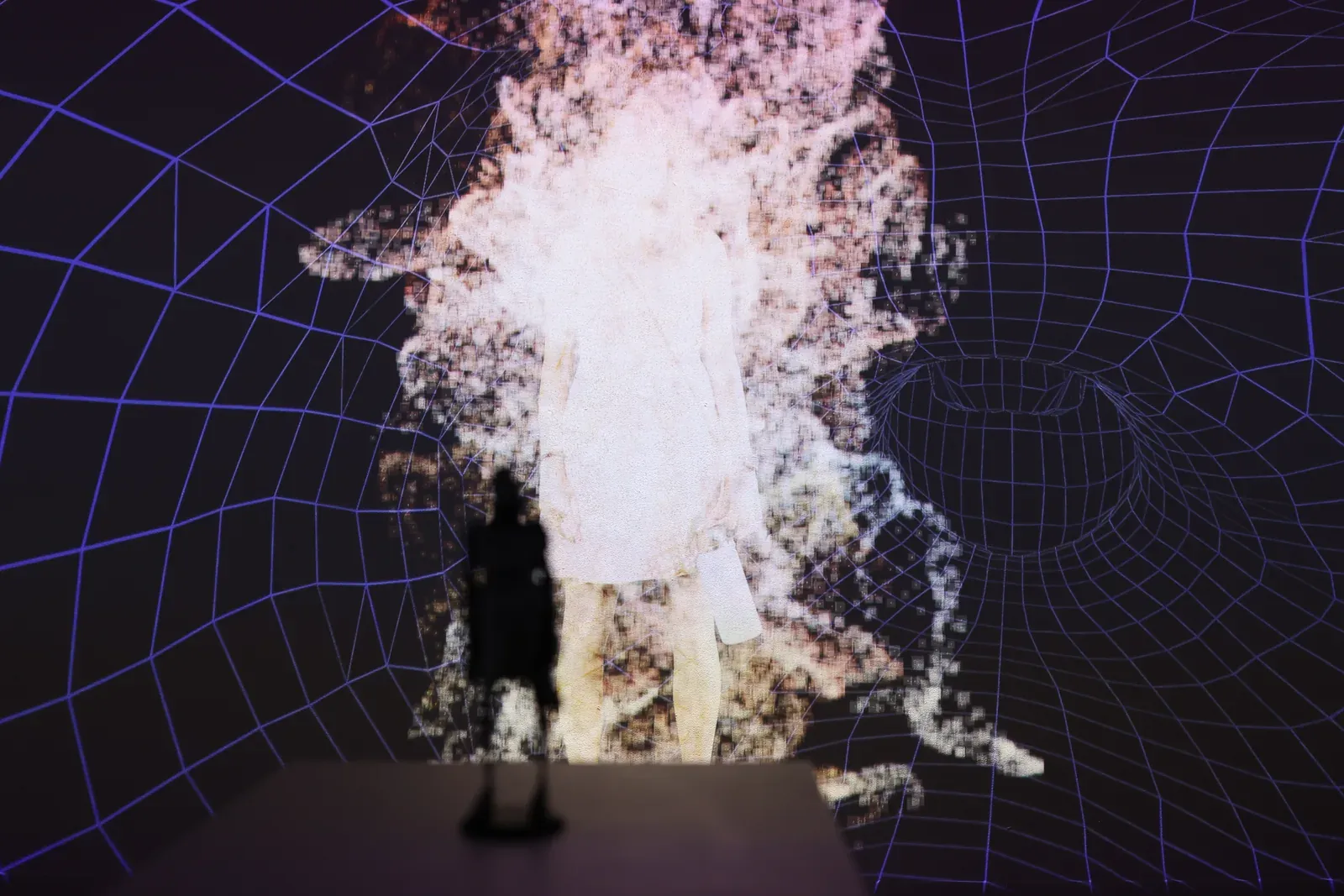
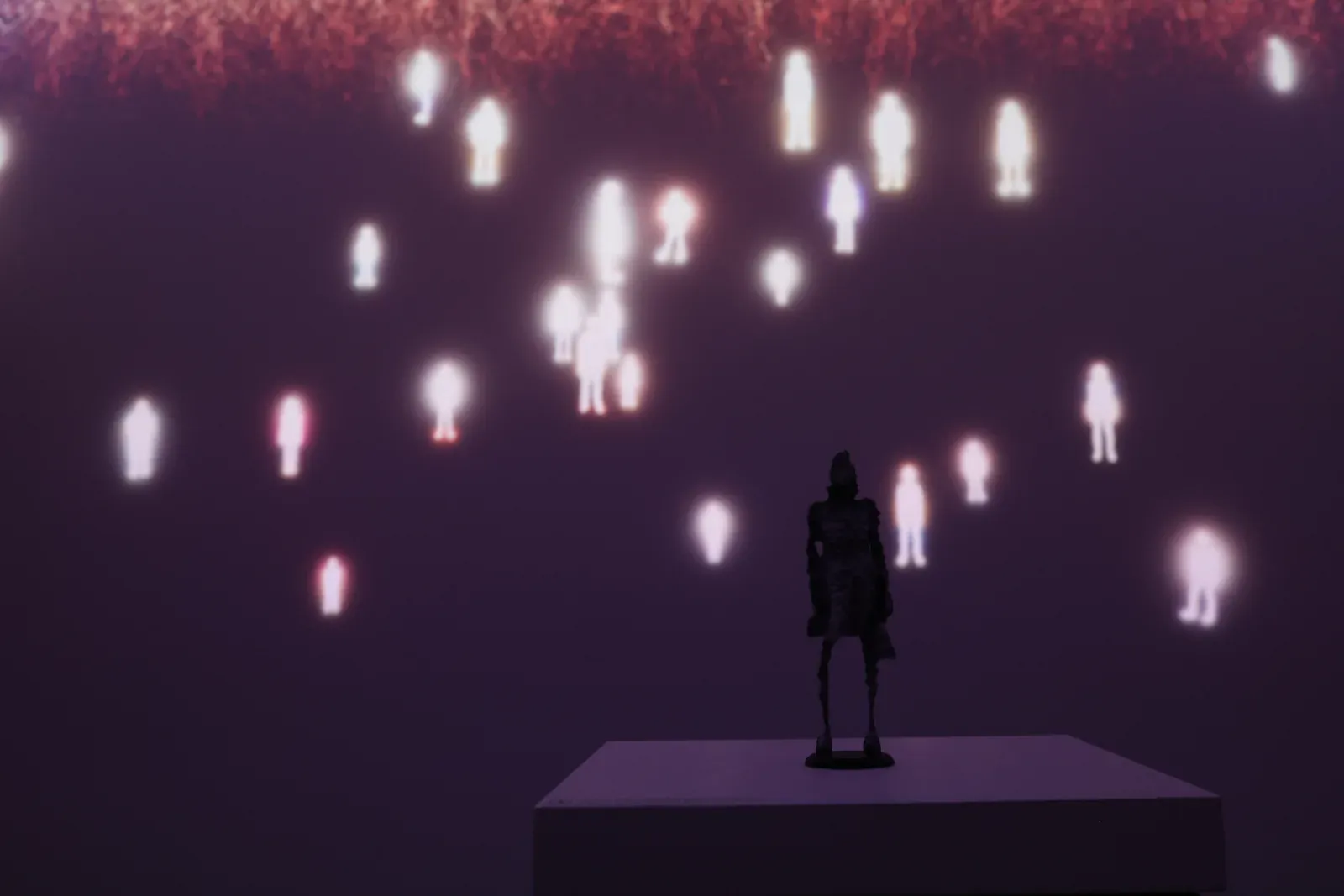
Visitors can walk around the 1/10-scale sculptures, one for each participant. Placing a sculpture on the platform at the center plays that participant’s data set as a visual and audio experience.
§ 03
How it works
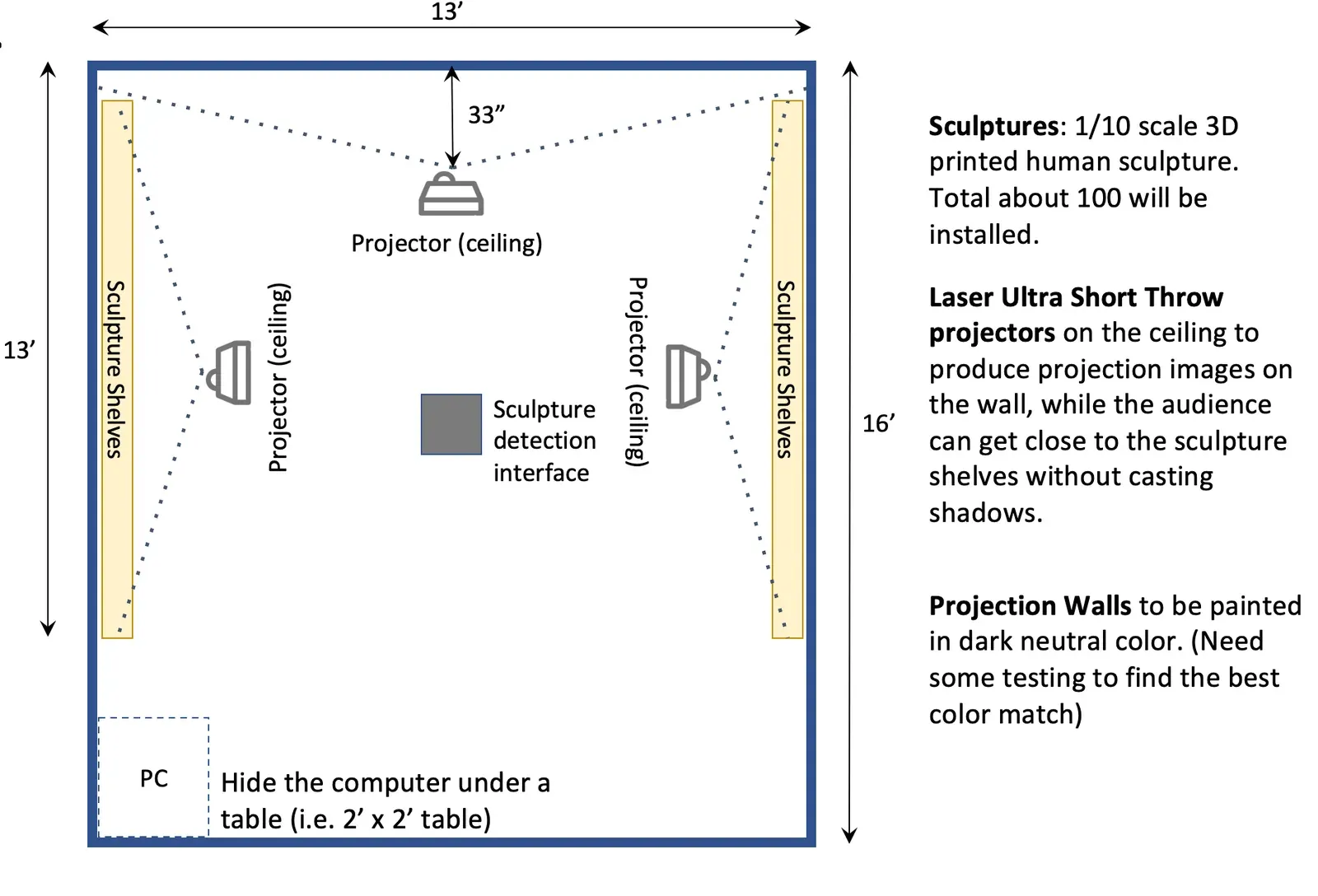
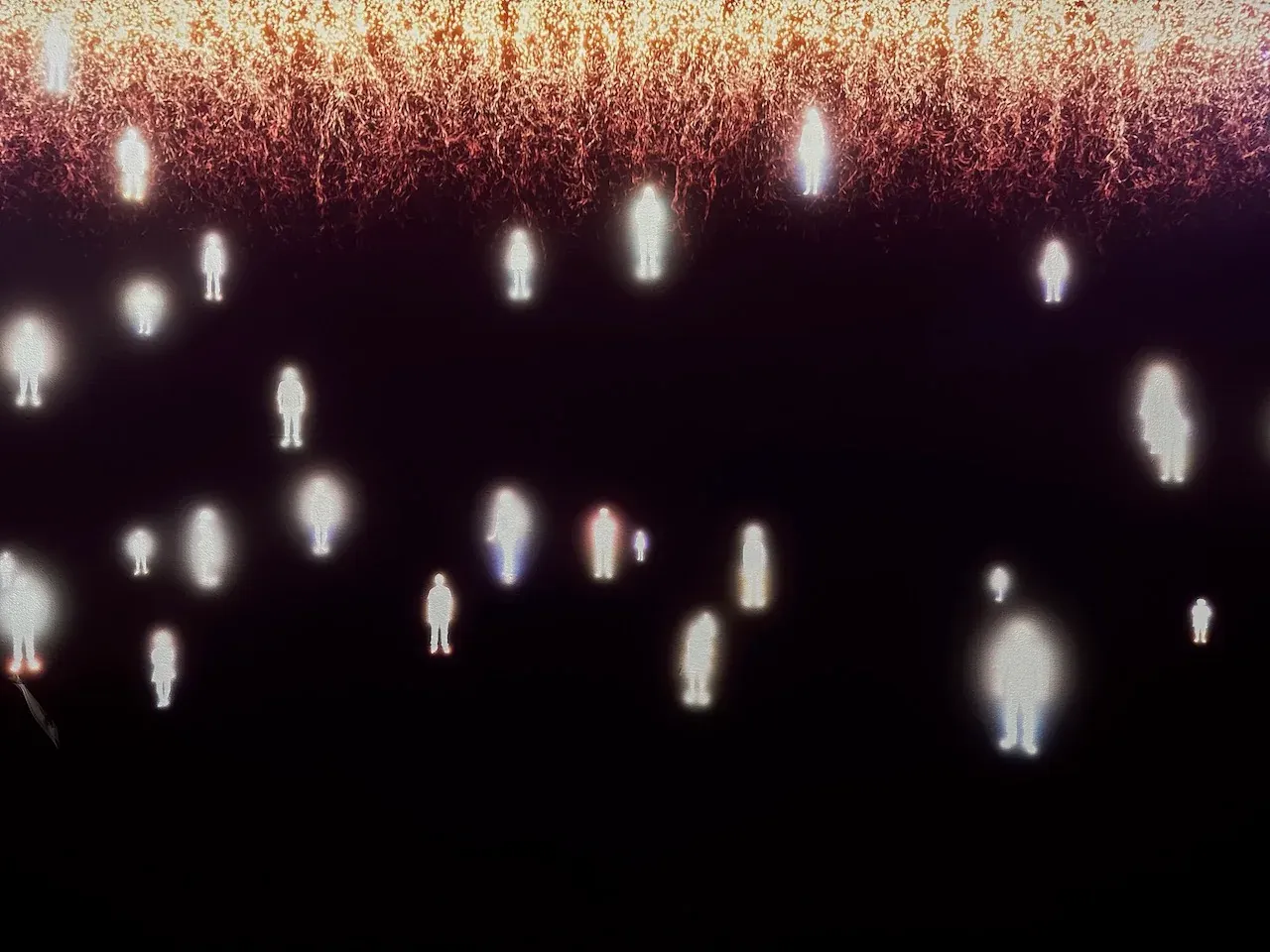
An RFID reader in the center platform detects the ID of the sculpture placed on it. It sends the ID to the main computer, which renders that participant’s visualization and audio.
This edition combined the two before it. The main visualization builds on the immersive 2021 version at the Cube, and the sculptures and their platform return from 2018.
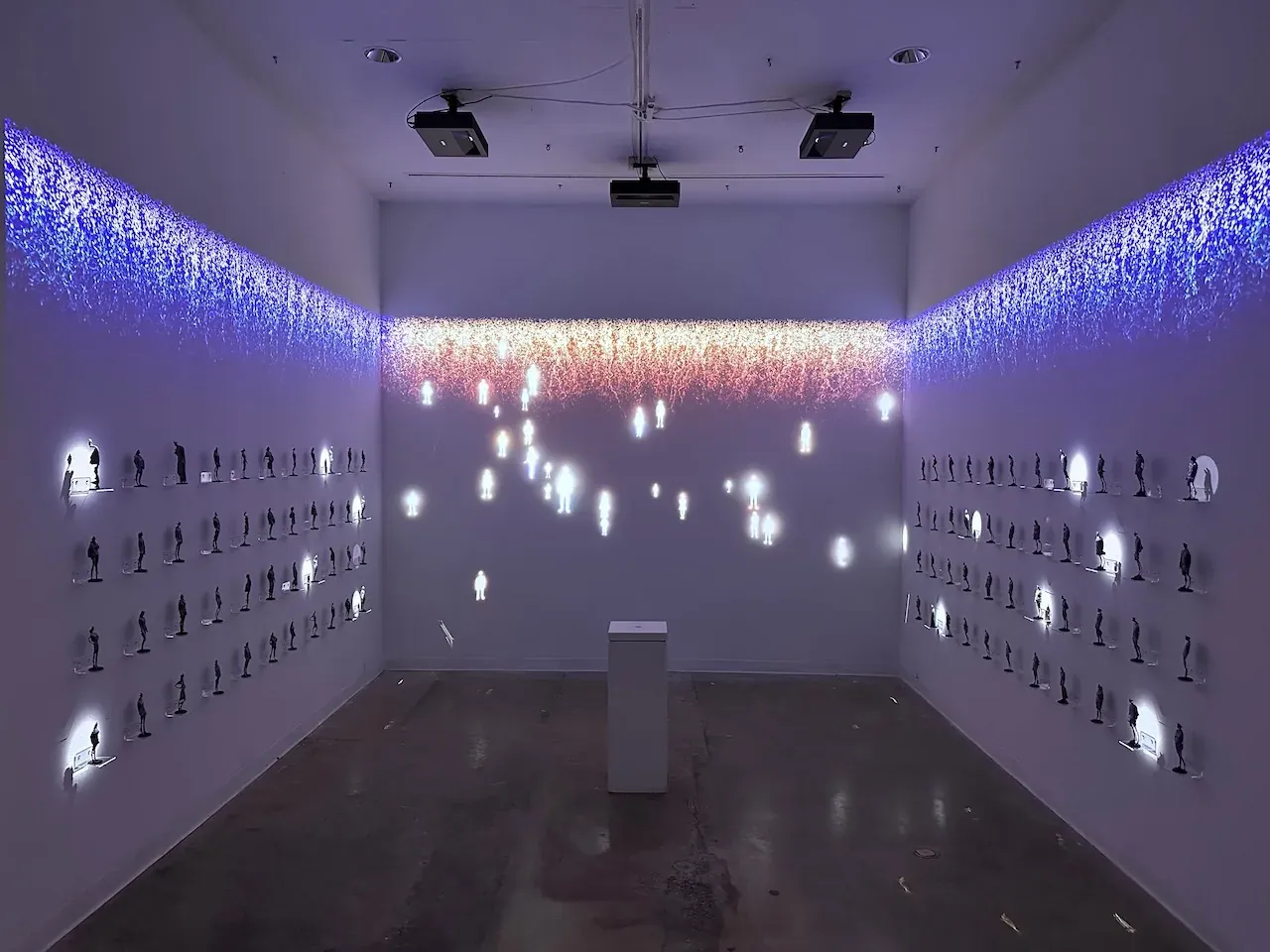
To bring the Cube’s immersion into the same small gallery as the first edition, 13 by 16 feet, we used three ultra-short-throw (UST) laser projectors mounted on the ceiling, one each for the front, left, and right walls. Each casts an image 13 feet wide from just a few feet away. Adjusting the projection geometry of these consumer projectors was a challenge, but their steep angle has a benefit: visitors can walk up to a side wall to look at a sculpture without casting a large shadow, blocking only part of a forearm and hand.
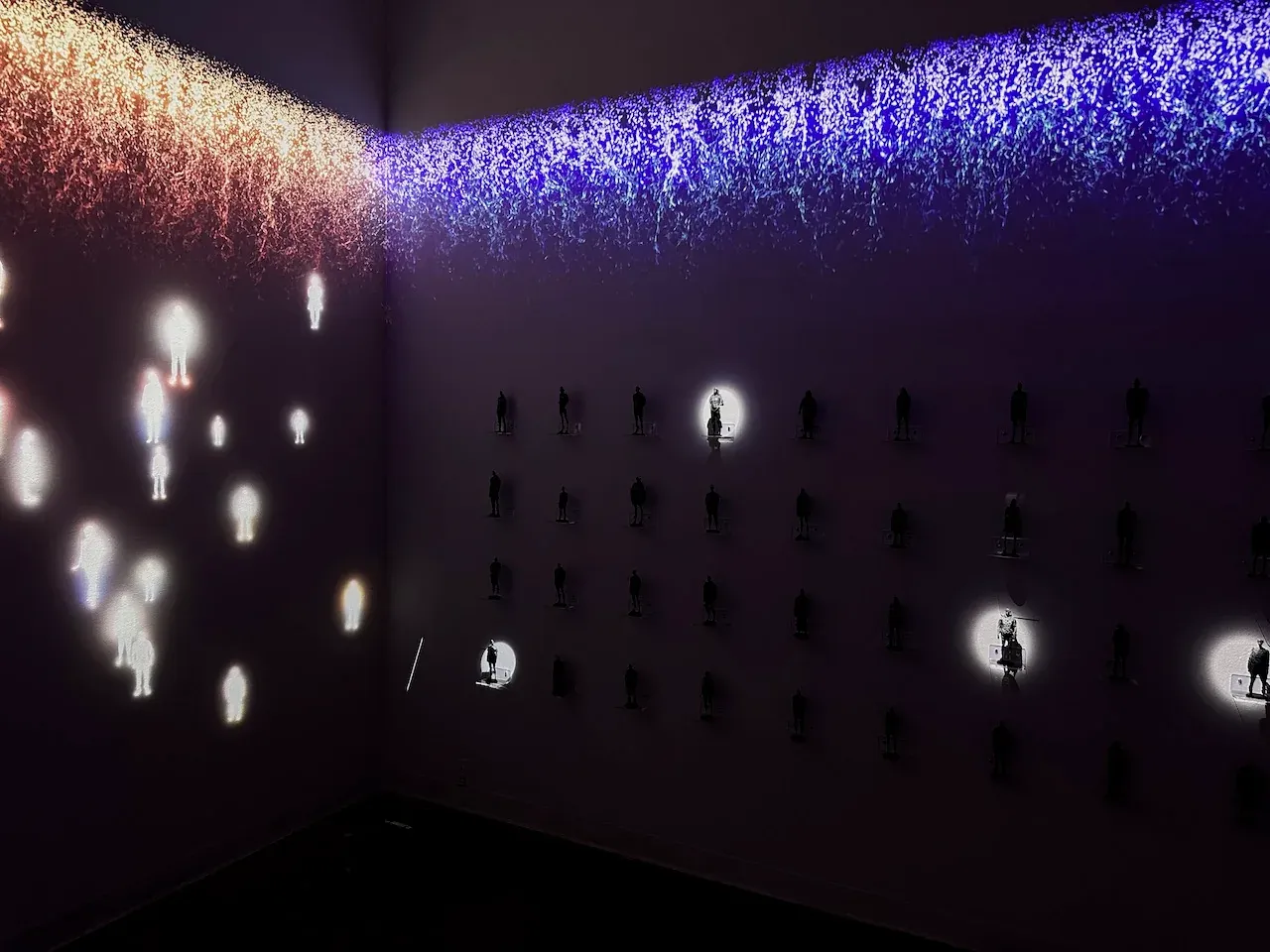
The front wall holds the main visualization. The side walls hold about 100 sculptures on small clear acrylic shelves, 44 on each wall in 11 columns and four rows. A randomized spotlight, rendered in real time as part of the projection, moves across the sculptures and invites visitors to pick one up.
§ 04
Gallery
§ 05
Video
§ 06
Credits
- Collaborators
- Andrea N. Baldwin
- Heidi Henderson
- Sangyoon Lee
- Student researchers
- Lien Har ’23
- Support
- Faculty Research Grant, Ammerman Center for Arts and Technology
- Jean C. Tempel ’65 Computer Science Assistant Professorship
- Summer Science Research Institute
- Research Matters grant, Office of the Dean of Faculty, Connecticut College
- Thanks
- The participants who volunteered for the 2017 photo event and the 2021 performance, where we collected photographs and 3D data
- The Ammerman Center for Arts and Technology, for its generous support
- Photography and video
- Sangyoon Lee
§ 07
References
- Baldwin, A. N., Henderson, H., & Lee, S. (2020). (Re)creating the posture portraits: Artistic and technological (re)productions of the gendered (re)presentations of bodies at institutions of higher education. Body Studies Journal, 2(1). https://bodystudiesjournal.org/postureportraits/ (opens in a new tab)