The Reminiscence at the ACM SIGGRAPH 2023 Art Gallery
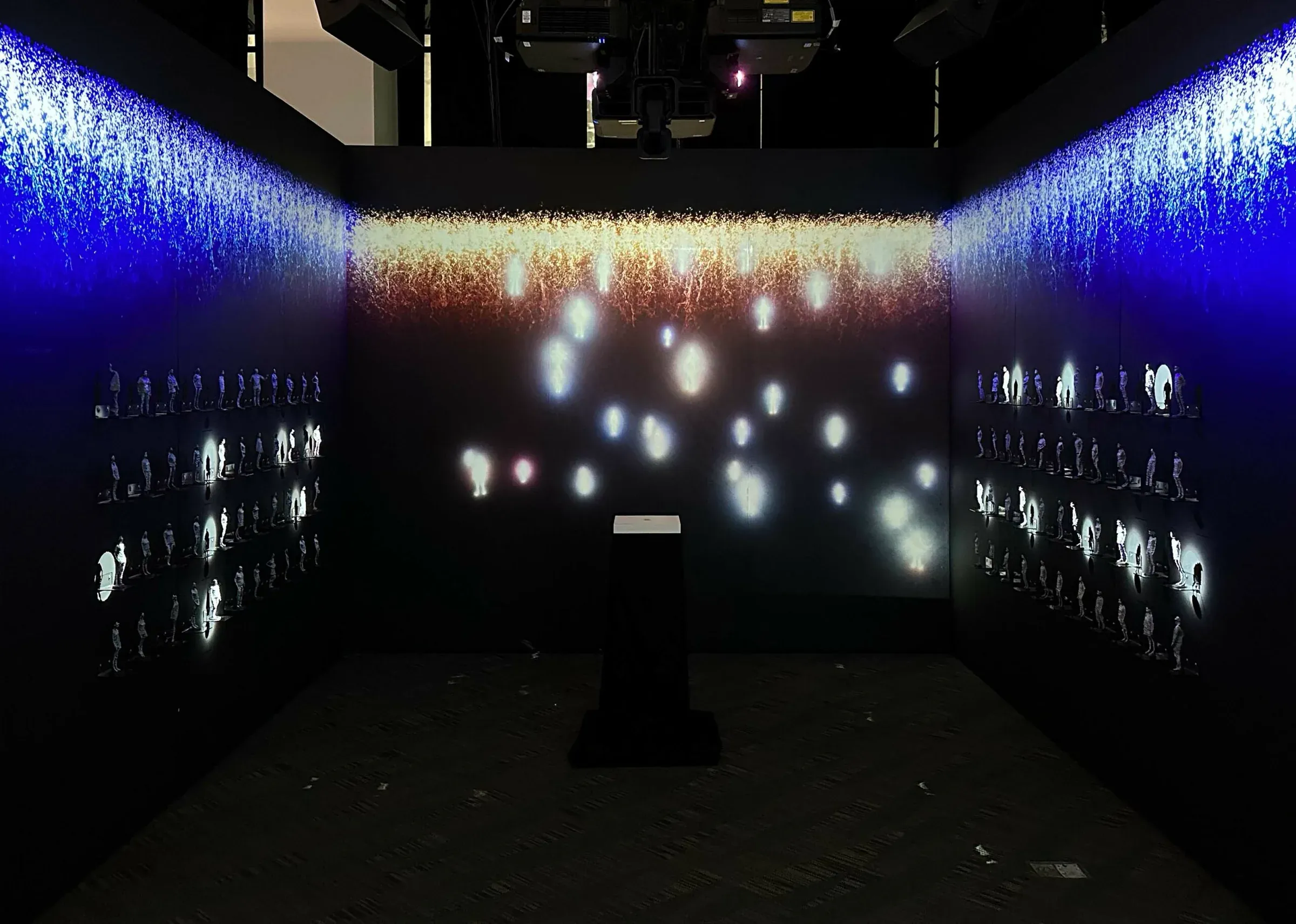
The work’s first showing at a computer graphics conference, in the juried ACM SIGGRAPH 2023 Art Gallery.
§ 01
About this edition
Dates
August 6–10, 2023
Venue
ACM SIGGRAPH 2023 Art Gallery, Los Angeles Convention Center, Los Angeles, CA
Related
Lee, Baldwin, & Henderson (2023), ACM SIGGRAPH 2023 Art Gallery (opens in a new tab)
In 2023, The Reminiscence was juried into the ACM SIGGRAPH Art Gallery, at the leading conference on computer graphics and interactive techniques. The show took the project from campus galleries to a technology conference. There we met computer scientists, media artists, and technologists, and talked about the ethics of data capture and new forms of interactive storytelling. Those connections led directly to our 2024 exhibition at the Pennsylvania College of Art & Design.
Research
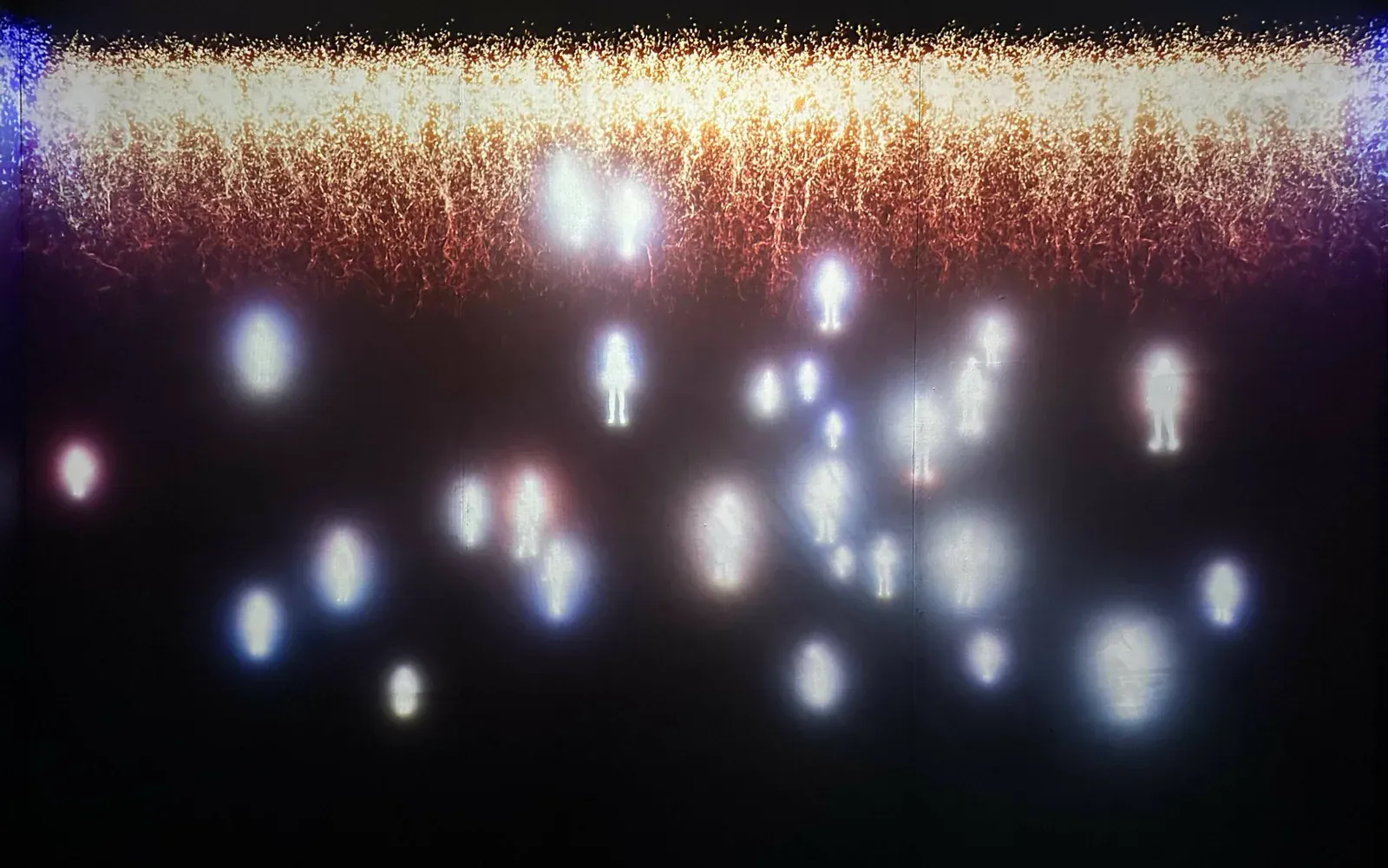
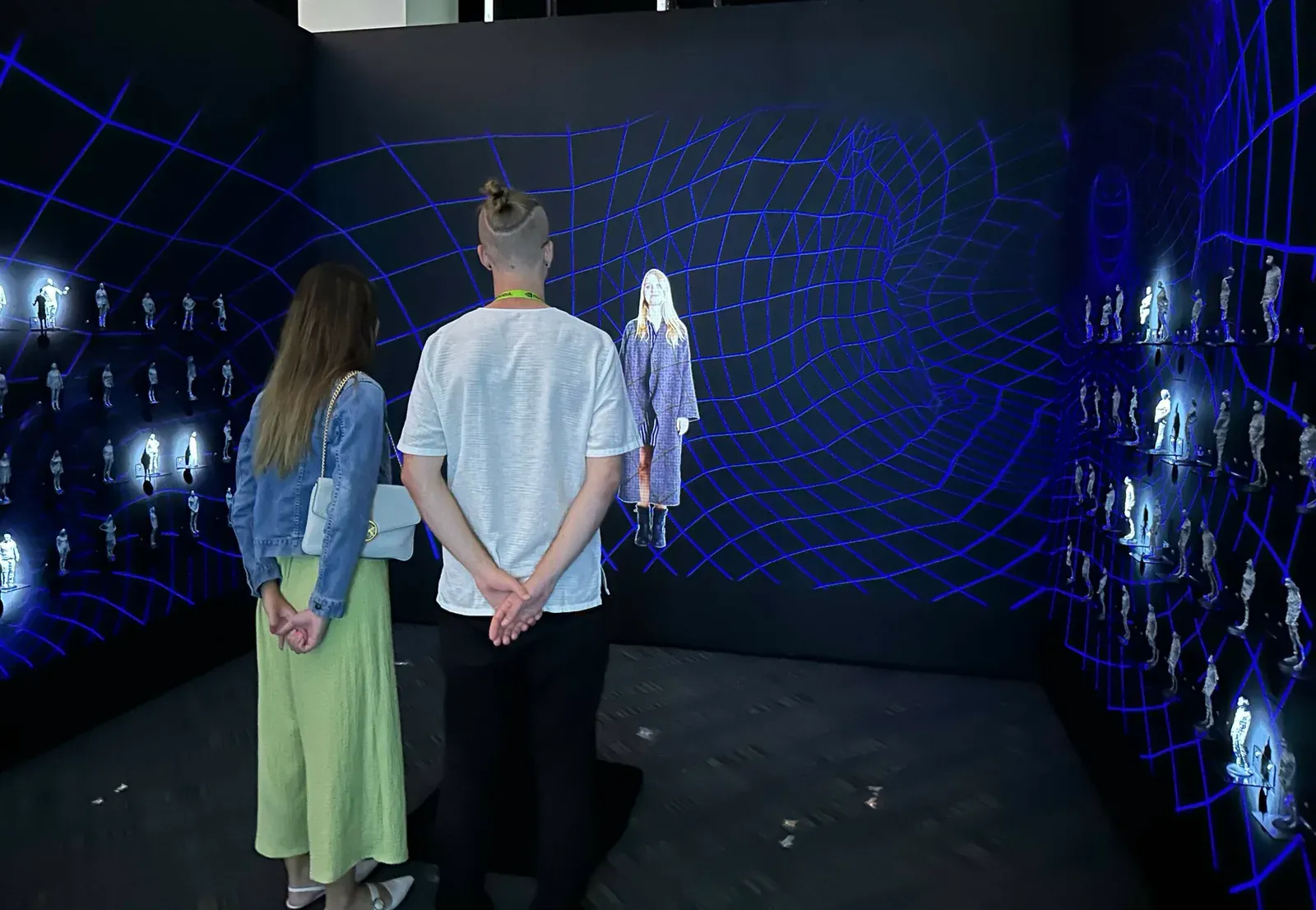
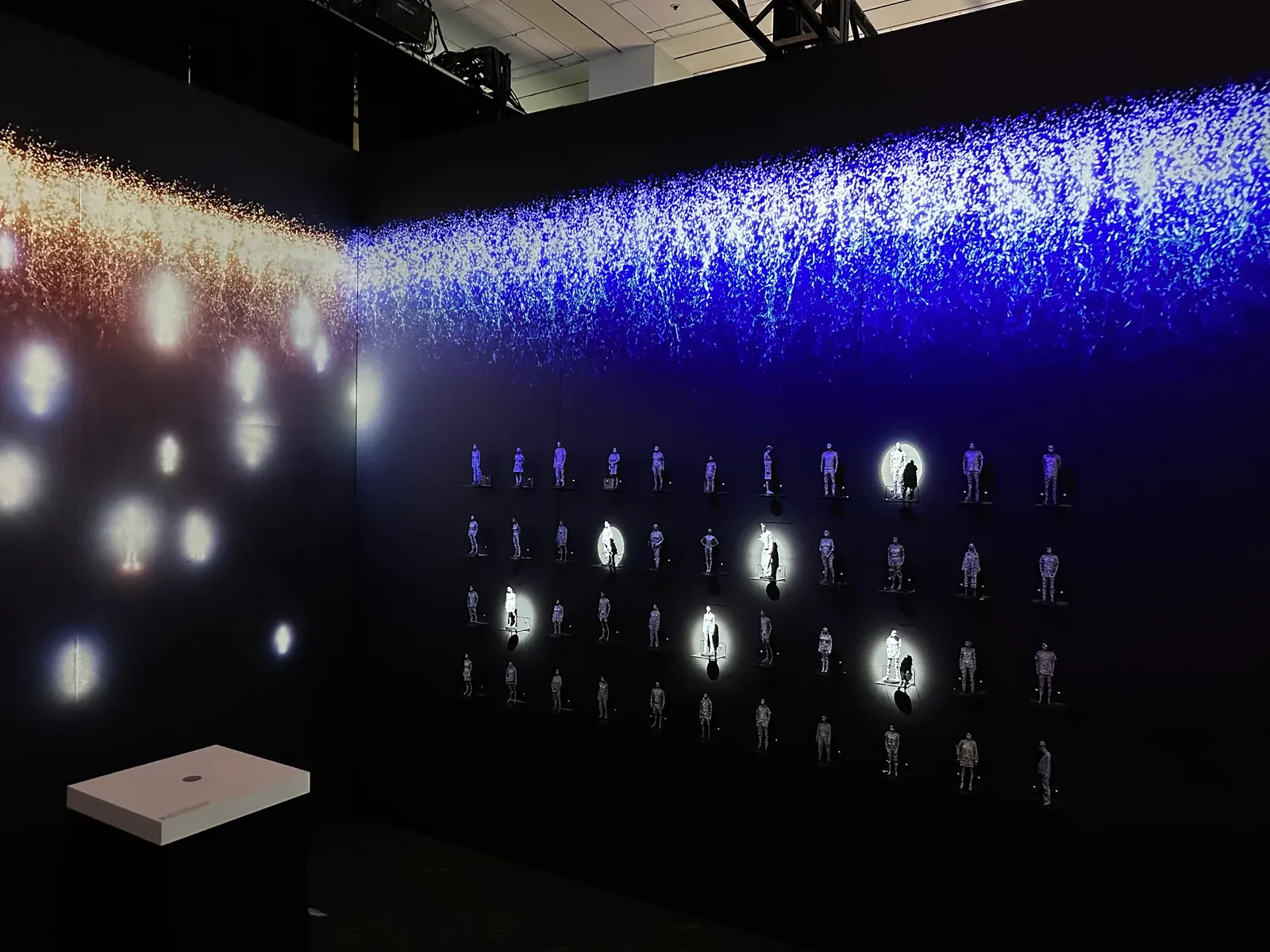
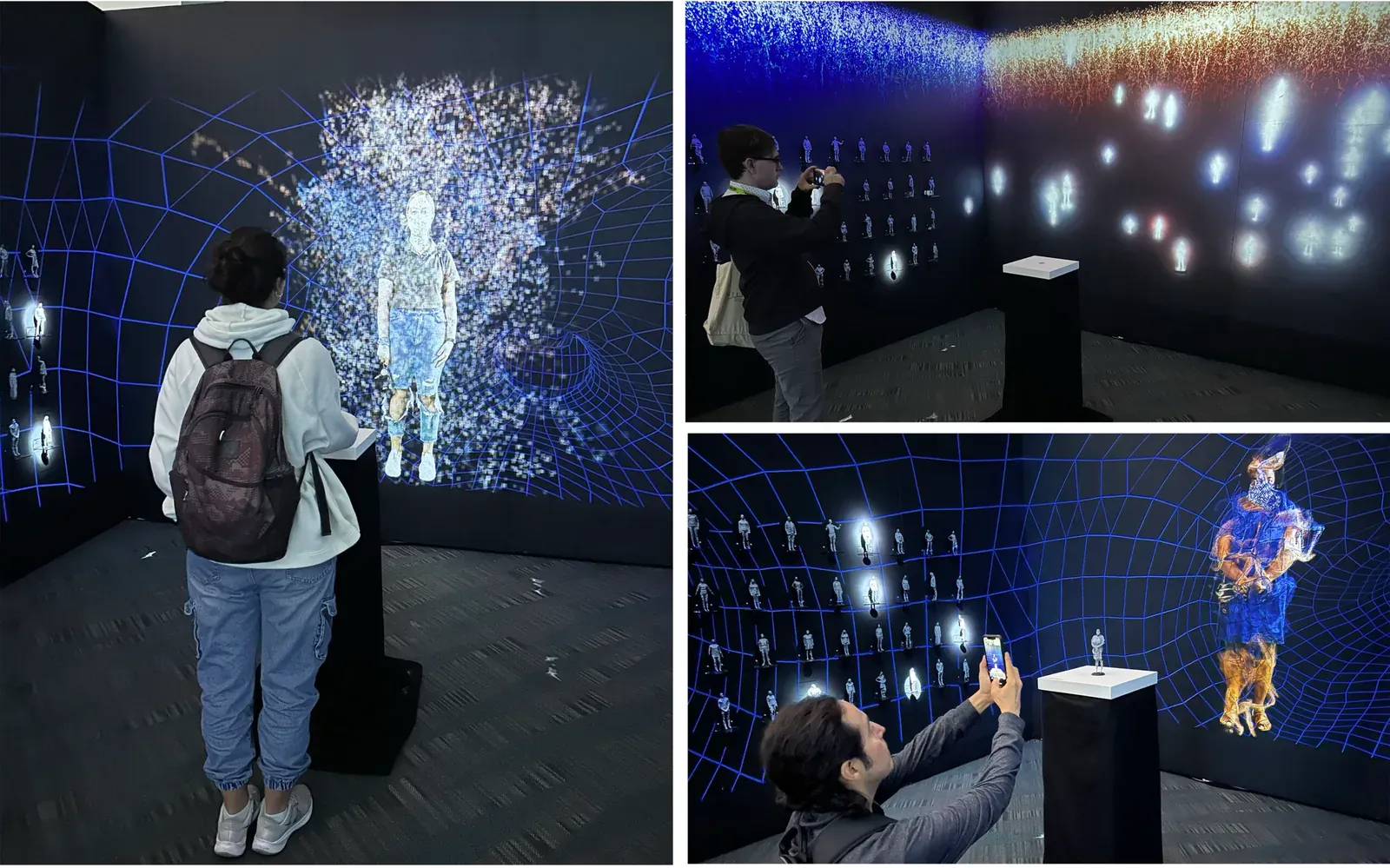
At SIGGRAPH, the work stood apart from neighboring exhibits that often celebrated technological novelty without questioning its history. It foregrounded the racialized and gendered logics of control built into archival practices and their technological successors (Browne, 2015; Campt, 2017). Visitors met the immersive mesh-body visualization, slowly disappearing and reappearing in real time, alongside sculptures linked to participants’ stories. The work asked whose bodies are rendered into data, and what it means to see, or fail to see, those bodies in institutional repositories. Many visitors asked us exactly these questions.
Whether on the walls of an art school, in the 360-degree projection of a university black box theater, or on the floor of a technology conference, the work resists passive viewing. Deliberate projection and distortion invite viewers to stay with histories of bodily inscription and erasure. Technologies can reproduce the extractive logics of surveillance, or they can be turned toward witnessing, ethical recognition, and other ways of knowing (Hartman, 2008; Benjamin, 2019; McKittrick, 2021).
§ 02
The installation
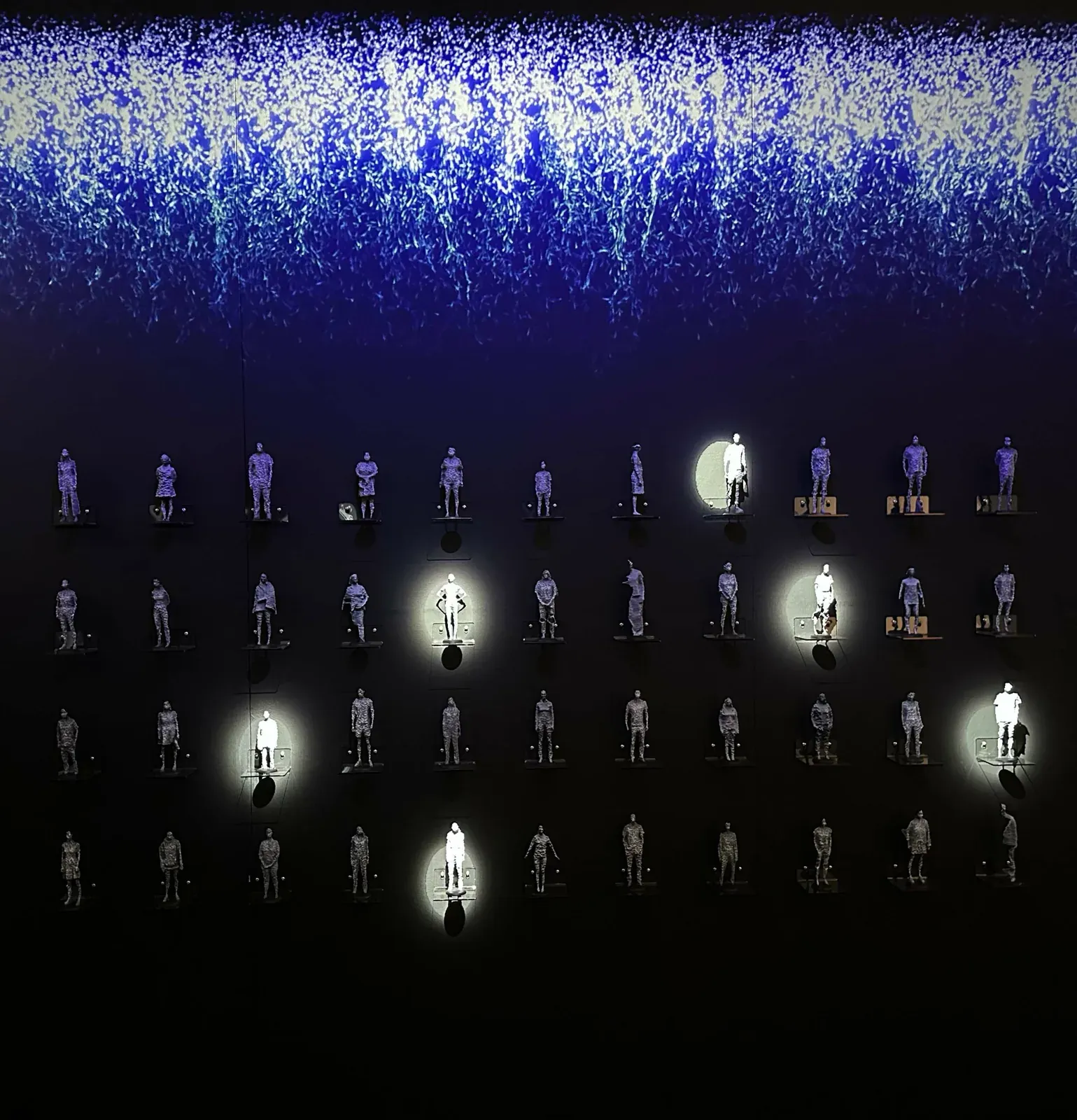
Visitors met two things at once: the projected mesh-body visualization and the participants’ 3D-printed sculptures. Placing a sculpture on the pedestal triggers that participant’s visual and narrative sequence.
§ 03
How it works
The framework stayed the same as in earlier editions, but SIGGRAPH called for changes to meet professional display standards. A high-end laser projection system raised brightness and contrast on the black-painted walls. Its deep blacks matter to the mesh-body visualization, which relies on a high dynamic range to show moments of near-total disappearance and re-materialization.
Each participant sculpture carries an RFID tag that triggers its visual and narrative sequence.
§ 04
Gallery
§ 05
Credits
- Collaborators
- Andrea N. Baldwin
- Heidi Henderson
- Sangyoon Lee
- Photography
- Sangyoon Lee
§ 06
References
- Benjamin, R. (2019). Race after technology: Abolitionist tools for the New Jim Code. Polity.
- Browne, S. (2015). Dark matters: On the surveillance of Blackness. Duke University Press.
- Campt, T. (2017). Listening to images. Duke University Press.
- Hartman, S. (2008). Venus in two acts. Small Axe, 12(2), 1–14.
- McKittrick, K. (2021). Dear science and other stories. Duke University Press.